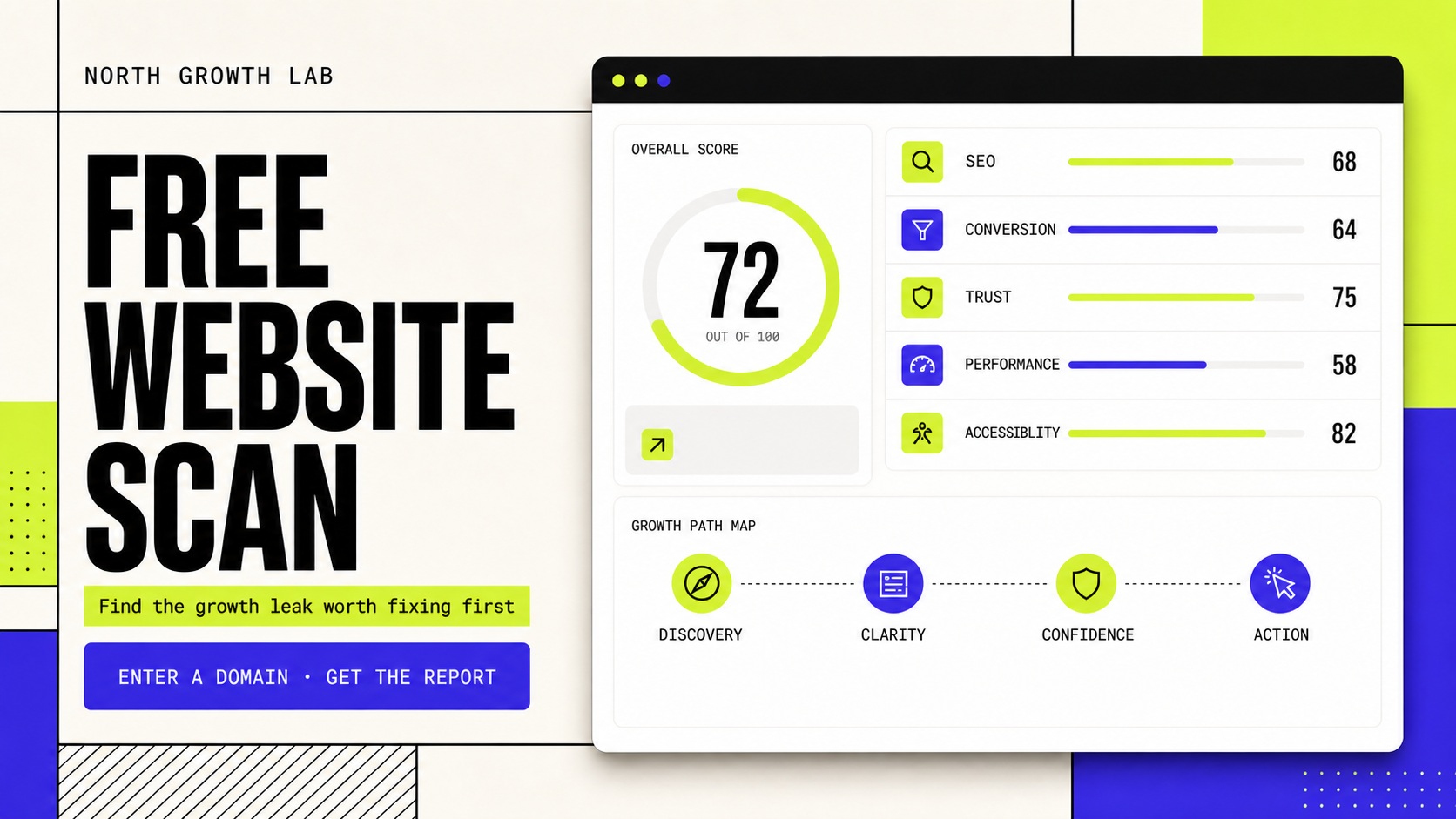
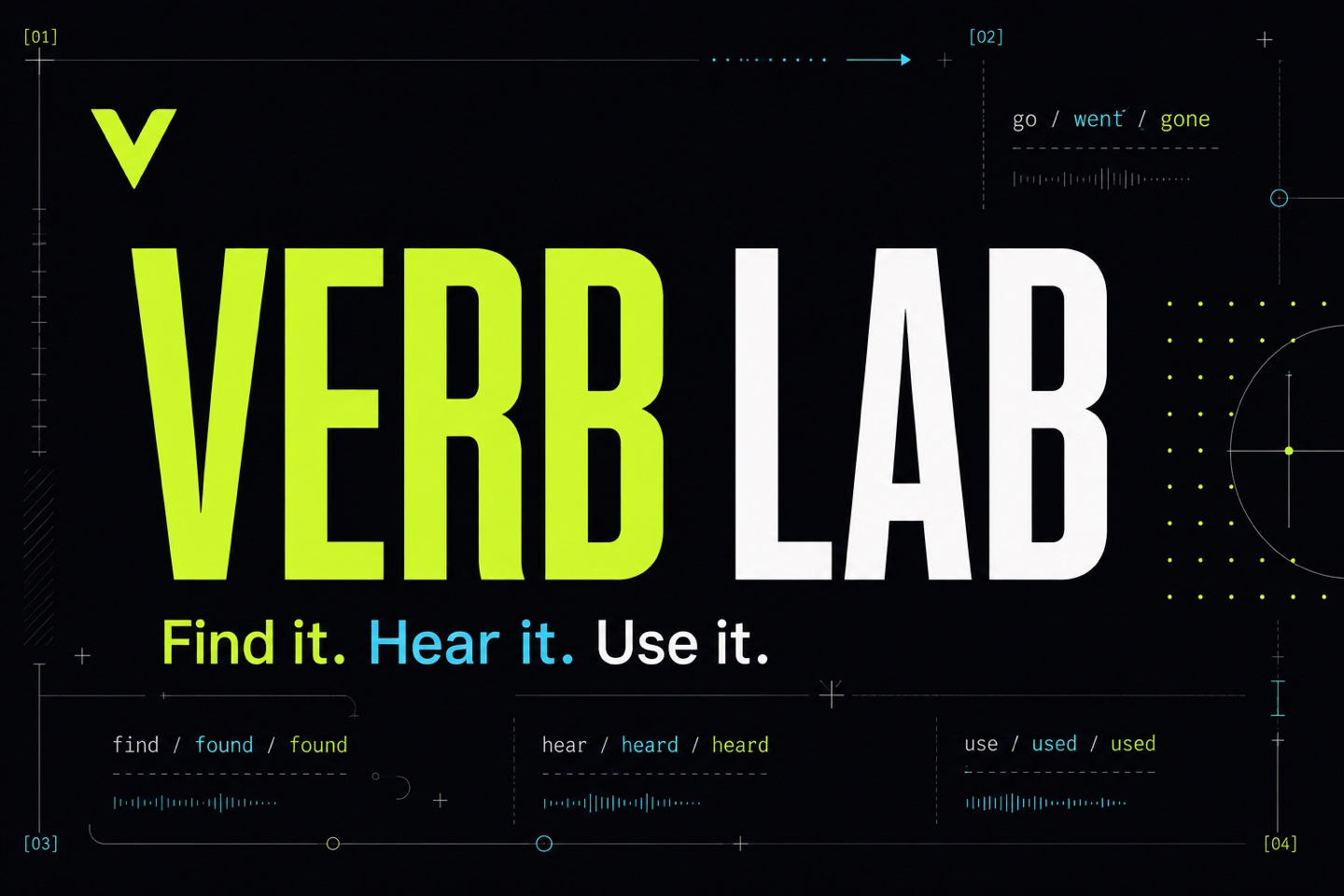
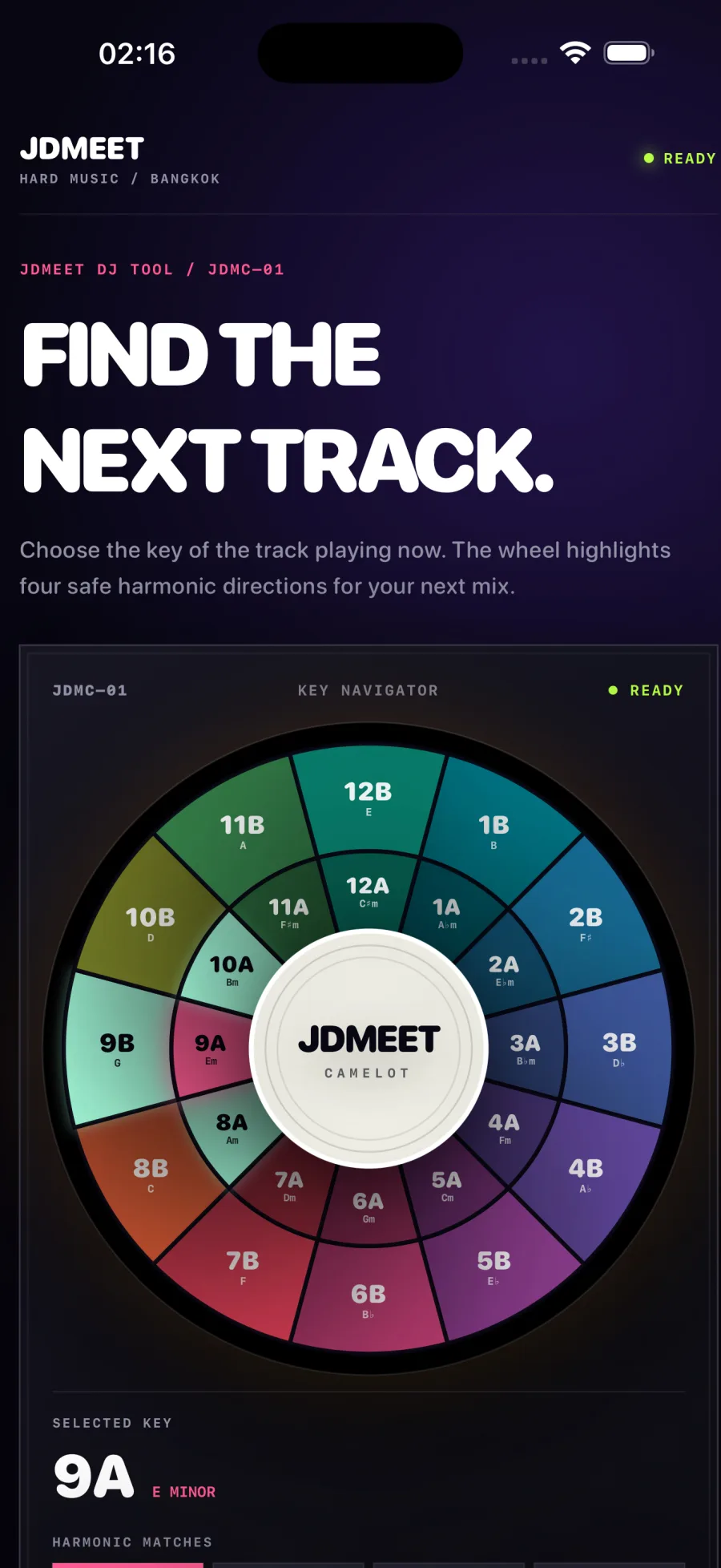
Client websites, our own working products and native apps. Two selected hospitality and brand concepts are clearly labelled.
LIVE PRODUCT
WE ARE MK STUDIO
A marketing studio with a personal point of view.
About this project
A complete identity and website for Madina Kabidenova’s marketing studio. The MK monogram, blue palette and scroll-controlled film lead into case studies and a callback form connected to Telegram and corporate email.
Our live JD Studio website brings web design, application development and automation into one studio identity, with motion-led storytelling, selected work and a direct project enquiry path.
An artist website for a Bangkok-based DJ performing across Asia. Live-session video, selected SoundCloud mixes and direct Telegram booking bring his sound and identity together.
Learn verbs in your browser. Keep practising on iPhone.
About this project
A language-learning website and native iPhone app for English and other languages. Search verbs, explore conjugation tables, listen to pronunciation and practise active recall with multilingual explanations. The web version works on phones, tablets and desktop browsers.
An offline harmonic-mixing companion for iPhone and iPad. Choose a key on the 24-key Camelot wheel to see compatible neighbours and relative major or minor keys. Includes haptic feedback and VoiceOver support, with no account or advertising.
A practical scope for website maintenance, monitoring, backups, lead delivery, reporting and accountable support—plus the items that need separate approval.
Map a Google Ads landing-page lead from accepted form to delivery, qualification and customer outcome with a practical search-to-sale measurement plan.
A copy-ready Google Ads landing page brief connecting search intent, ad promise, proof, qualification, tracking, lead routing and launch acceptance before design begins.
A practical framework for deciding whether to redesign the current website, rebuild the platform or improve the highest-leverage pages without replacing everything.
A realistic website redesign or rebuild timeline covering discovery, copy, development, content and SEO migration, integrations, quality assurance and launch.
Web application development typically costs $10,000–$100,000+, depending on workflows, roles, data, integrations and risk. Compare practical 2026 scope bands.
How North Growth Lab designed and built a responsive six-pad rhythm sampler with real audio, rapid retriggering and live waveform feedback for the JDMEET artist website.
Landing page or website for Google Ads? Use a six-check decision matrix, hotel and design-studio examples, and a practical brief to choose the right destination.
A transparent guide to landing-page scope, cost drivers and budgeting for businesses that need qualified leads from paid search—not a decorative one-page design.
A practical decision framework for choosing a website, web application, iOS or Android app—and knowing when the business needs a connected combination.
Compare iOS, Android and simultaneous mobile development by audience, product behavior, device requirements, release operations and commercial evidence.
How we rebuilt our studio website around real projects, distinct service pages and crawlable content, with a practical release record and clear measurement limits.
Custom Software Development Checklist: 8 Acceptance Gates
Updated August 16, 2026
Use eight evidence-led gates to scope, test, launch and hand over custom software—from the first workflow to recovery, ownership and operations.
This is a planning and acceptance framework, not a contract, certification, security assessment or individualized legal, privacy or regulatory advice. The gym, restaurant and internal-operations examples are illustrative—not North Growth Lab client case studies or outcome claims.
A custom software checklist should define evidence—not just features.
A useful custom software development checklist does not end with a list of screens or integrations. It names eight acceptance gates, the evidence required at each gate, the person who verifies it and the response when the evidence fails. Define those conditions before development begins, then reuse them for each milestone and the final production handoff.
This changes the buying conversation. A goal explains why the software matters. A requirement describes a necessary capability or constraint. An acceptance criterion makes the expected result observable. Evidence is the record—test result, working flow, account access, restore log or signed decision—that lets the responsible person verify the criterion. A proposal can mention all four while still leaving responsibility unclear, so the owner and failure action belong in the same plan.
Planning layer
Goal
Question it answers
Why is the business investing?
Example
Reduce manual class-booking work without losing staff control
Planning layer
Requirement
Question it answers
What capability or constraint is necessary?
Example
Members can reserve an eligible class against live capacity
Planning layer
Acceptance criterion
Question it answers
What observable condition means the requirement is satisfied?
Example
An eligible member can reserve the final place once; the next attempt receives an accurate full state
Planning layer
Evidence
Question it answers
What proves the condition?
Example
Recorded test, booking ledger and capacity result in the release environment
Copy this acceptance evidence ledger before requesting proposals.
Create one row for every launch-critical condition. Keep an explicit unknown when the buyer and delivery team have not decided something; do not let an empty cell silently become included work. The ledger can live in a product brief, delivery workspace or statement of work, but the parties should agree which version is authoritative.
The template below is intentionally operational. It does not prescribe a development methodology or contract. It makes the acceptance conversation comparable across an internal team, freelancer or software company.
Gate
1 / Business boundary
What must be true
Named user, job, outcome and exclusions
Evidence
Approved boundary record
Owner
Business owner
Verifier
Product owner
Failure action
Revise scope before estimate
Accepted on
YYYY-MM-DD
Gate
2 / Workflow
What must be true
One end-to-end job handles agreed states
Evidence
Scenario test and result
Owner
Product owner
Verifier
Named user or operator
Failure action
Return the failed state to delivery
Accepted on
YYYY-MM-DD
Gate
3 / Data and integrations
What must be true
Sources, movement, recovery and export are proven
Evidence
Data map and test records
Owner
Data owner
Verifier
Operations or technical owner
Failure action
Stop release or accept a documented limit
Accepted on
YYYY-MM-DD
Gate
4 / Security and privacy
What must be true
Risk-specific controls and responsibilities are verified
Evidence
Review record and test evidence
Owner
Risk owner
Verifier
Qualified reviewer where required
Failure action
Remediate, reduce scope or record accepted risk
Accepted on
YYYY-MM-DD
Gate
5 / Accessible UX
What must be true
Priority journeys work for agreed users and devices
Evidence
Keyboard, responsive and relevant WCAG checks
Owner
Product owner
Verifier
Assigned accessibility reviewer
Failure action
Fix the blocked journey before release
Accepted on
YYYY-MM-DD
Gate
6 / Release and recovery
What must be true
The team can deploy, observe, roll back and restore
Evidence
Release, rollback and restore record
Owner
Technical owner
Verifier
Operations owner
Failure action
Hold release until recovery is credible
Accepted on
YYYY-MM-DD
Gate
7 / Measurement and operations
What must be true
Outcome, support and failure signals reach an owner
Evidence
Event trace, alert and support test
Owner
Operations owner
Verifier
Business owner
Failure action
Repair the missing handoff
Accepted on
YYYY-MM-DD
Gate
8 / Ownership and handoff
What must be true
Agreed code, accounts, documents and duties are controlled
Evidence
Access register and handoff record
Owner
Client owner
Verifier
Authorized approver
Failure action
Close the gap before final acceptance
Accepted on
YYYY-MM-DD
Gate 1: approve the business boundary before estimating the system.
Begin with one named user, one recurring job and one business outcome. Describe the current workaround, the decision the product must improve, what the first release excludes and the evidence that would justify another release. A technology stack cannot repair an undefined operating boundary.
The boundary should also identify the operating owner. A customer portal, restaurant app or internal workflow still needs someone to resolve exceptions, correct data, manage eligibility and decide what changes next. If that job has no owner, the software proposal is missing part of the product.
Primary user and the situation that triggers the workflow.
Current process, delay, error or commercial constraint the product replaces.
Observable first-release outcome and the evidence needed to continue investing.
Explicit exclusions, assumptions, decision owner and operating owner.
Known legal, regulatory, accessibility, privacy or market questions requiring qualified review.
Gate 2: accept one thin end-to-end workflow—not a collection of screens.
A thin production slice crosses the whole job with the minimum roles, data and integrations needed to prove it. Test the happy path, permissions, empty states, invalid inputs, interrupted actions and the handoff to a person or downstream system. A clickable prototype can validate language and interaction; it is not evidence that production identities, money, data or recovery work.
Write scenarios in business language. Who begins the action? What information must already exist? Which rule changes the result? What state is stored? Who can reverse or correct it? What can the user do when a dependency fails? Those questions create more useful acceptance criteria than counting screens.
Workflow evidence
Primary scenario
Accept when
The named user reaches the agreed success state
Reject or clarify when
The demo skips an operational handoff
Workflow evidence
Roles and permissions
Accept when
Every action is allowed or denied for an explicit reason
Reject or clarify when
Access is inferred from hidden interface controls alone
Workflow evidence
Edge and recovery states
Accept when
Important empty, invalid, timeout and retry behavior is usable
Reject or clarify when
Only the ideal path exists
Workflow evidence
Administrative path
Accept when
A responsible operator can review and correct agreed exceptions
Reject or clarify when
The team must edit production data manually
Gate 3: prove where data comes from, where it goes and how it recovers.
Name the source of truth for every important record and field. Define which system may create or change it, how updates travel, what identifies duplicates, how failed transfers retry and what an operator sees when synchronization stops. Integration acceptance is not a successful API call; it is a controlled business result through success, delay and failure.
For migrations, test a representative sample before the final move. Record transformations, rejected rows, reconciliation totals and the rollback or correction path. For ongoing operations, demonstrate a usable export for the data the business is entitled and expected to control. The exact retention, portability and privacy duties depend on the product and market and should be reviewed accordingly.
System of record and field-level ownership for shared data.
Identity, duplicate and conflict rules across systems.
Retry, alert, reconciliation and manual-correction behavior.
Migration sample with counts, rejected records and sign-off.
Backup, restore and agreed data-export evidence.
Gate 4: make security and privacy controls match the product's real risk.
Security acceptance starts with users, privileges, sensitive data, trust boundaries and plausible abuse—not a generic badge. Define authentication, authorization, secret handling, logging, dependency and vulnerability responsibilities proportionally to the product. Record who can accept a residual risk and which findings block release.
NIST's Secure Software Development Framework organizes practices for preparing the organization, protecting software, producing well-secured software and responding to vulnerabilities. OWASP ASVS provides a basis for testing web-application technical controls and requirements for secure development. Use relevant controls as planning and verification inputs; referencing either standard does not itself prove certification, compliance or a complete security assessment.
Boundary
Identity
Acceptance question
Are registration, recovery and session rules appropriate for the risk?
Possible evidence
Scenario tests and configuration record
Boundary
Authorization
Acceptance question
Can every sensitive action be tied to an allowed role and resource?
Possible evidence
Permission matrix and negative tests
Boundary
Sensitive data
Acceptance question
Are collection, storage, transmission, access and deletion decisions explicit?
Possible evidence
Data inventory and implementation review
Boundary
Vulnerabilities
Acceptance question
Who triages findings, dependencies and disclosures after launch?
Possible evidence
Scan results, owner, severity rule and response process
Gate 5: accept the priority journeys across keyboard, screen size and relevant accessibility criteria.
Accessible acceptance criteria belong in the workflow, not in a launch-week footer review. Test the agreed web surfaces for meaningful headings, labels, keyboard operation, visible focus, error identification, contrast, reflow and touch behavior. Include the user agents and assistive-technology checks appropriate to the audience and risk.
WCAG 2.2 presents testable success criteria for making web content more accessible across desktop and mobile devices. A project should state the targeted criteria and evaluation method instead of saying only that the product will be accessible. Mobile application acceptance may also require platform-specific accessibility and device behavior beyond web-content guidance.
Complete the primary workflow without a pointing device where the web surface supports keyboard input.
Confirm focus order, visible focus and recovery after validation or a modal transition.
Check programmatic labels, instructions, errors and status messages.
Verify contrast, zoom, reflow and absence of unintended horizontal page scrolling at agreed sizes.
Document the criteria, tools, manual checks, exceptions and responsible reviewer.
Gate 6: demonstrate deployment, rollback, backup and recovery before launch pressure arrives.
A release is not production-ready because a staging demo works. Define how an authorized person deploys the agreed source, how configuration and migrations are controlled, what health signals determine success and how the team returns to a safe state. The evidence may be an automated release record, a supervised run, or documented steps appropriate to the system.
Backups count only when the recovery objective and restore path are understood and tested to the level the business requires. Record who declares an incident, who can roll back, which changes cannot be reversed automatically and how customers or operators are informed. A small MVP can keep this simple; it cannot pretend the responsibility does not exist.
Operational action
Deploy
Acceptance evidence
Authorized release from the agreed source and environment
Named decision
Who may release and approve
Operational action
Observe
Acceptance evidence
Health, error and business-critical signals visible after release
Named decision
What constitutes healthy
Operational action
Roll back
Acceptance evidence
Tested or documented route to the previous safe version
Named decision
Who can trigger it
Operational action
Restore
Acceptance evidence
Representative restore proof or approved recovery procedure
Named decision
Recovery objective and owner
Operational action
Migrate
Acceptance evidence
Forward, validation and failure handling for data changes
Named decision
Which migrations are reversible
Gate 7: connect product outcomes, technical failures and support to accountable people.
Measurement should reveal whether the workflow creates value and whether the system can keep delivering it. Define the activation or completion event, the business outcome that follows, the technical signals that expose failure and the support route a real user can reach. Avoid collecting personal or sensitive data merely because an analytics tool can store it.
Test the complete trace. A restaurant order is not successful because the customer pressed Pay; the accepted payment, kitchen or fulfillment handoff and visible order state must agree. A gym booking is not complete if the member sees confirmation while capacity stays unchanged. An internal approval is not reliable if the audit history cannot explain who changed the decision.
One product event tied to the completed user job.
One business outcome that determines whether the workflow deserves more investment.
Technical error, latency and dependency signals with useful context and privacy boundaries.
Support contact, escalation route, response ownership and operating hours where relevant.
A review cadence and decision rule for the next release.
Gate 8: verify the ownership and handoff the parties actually agreed.
Handoff should match the project agreement and operating model. List repositories, cloud environments, domains, mobile-store accounts, third-party services, design assets, licences, documentation, open issues and support responsibilities. Record the client and delivery-team access required during the engagement as well as at its end.
Do not assume that paying an invoice creates the same intellectual-property, account, warranty or support outcome in every country or contract. Those terms require an explicit agreement and qualified advice where necessary. The operational acceptance test is simpler: can the authorized owner see, operate, export, release and transfer the agreed system without relying on an undocumented personal account?
Handoff area
Source and history
Evidence to request
Agreed repositories, branches, tags and release mapping
Question that prevents ambiguity
Which source produced the accepted production version?
Handoff area
Accounts and services
Evidence to request
Admin register, ownership and renewal responsibility
Question that prevents ambiguity
Whose legal and billing identity controls each account?
Handoff area
Configuration and secrets
Evidence to request
Environment inventory and secure rotation plan
Question that prevents ambiguity
Who can recover access without the original developer?
Handoff area
Documentation
Evidence to request
Architecture, setup, release, recovery and operator guidance
Question that prevents ambiguity
Can another competent team follow the agreed operating path?
Handoff area
Open work and support
Evidence to request
Known issues, exclusions, warranty/support terms and contacts
Question that prevents ambiguity
What happens after acceptance and who owns it?
Three illustrative products need different evidence from the same eight gates.
The following examples are hypothetical. They show why the acceptance framework travels across industries while the evidence does not. A restaurant, gym and operations team may all need accounts, notifications and reporting, but the states, risks and owners are different.
Illustrative product
Gym booking system
First accepted workflow
Eligible member reserves one class against live capacity and can cancel within the agreed rule
Critical evidence
Capacity concurrency, membership eligibility, waitlist or full state, staff override and notification result
Operational owner
Membership or front-desk operations
Illustrative product
Restaurant ordering and loyalty
First accepted workflow
Eligible customer places an available order and receives an accurate fulfillment state
Critical evidence
Menu and stock truth, payment result, kitchen handoff, cancellation/refund boundary and loyalty ledger
Operational owner
Restaurant operations or fulfillment lead
Illustrative product
Internal approval tool
First accepted workflow
Authorized employee submits a record that reaches the correct approver and final state
Critical evidence
Role matrix, delegation, due dates, immutable decision history, integration result and export
Operational owner
Process owner or compliance operations
Compare software proposals by responsibility and evidence—not stack names.
Normalize proposals against the same evidence ledger. If one proposal includes product discovery, administration, monitoring and handoff while another lists only frontend and backend development, their totals do not describe equivalent work. Mark every missing responsibility as unknown until the bidder confirms the boundary.
Comparison row
End-to-end workflow
Proposal A
Named states and operator path
Proposal B
Features only
Buyer decision
Request scenario-level acceptance evidence
Comparison row
Data and integrations
Proposal A
Source, retries and reconciliation included
Proposal B
API connection listed
Buyer decision
Clarify failure and ownership boundaries
Comparison row
Security and accessibility
Proposal A
Risk-specific controls and review method
Proposal B
Best practices
Buyer decision
Replace broad language with scoped criteria
Comparison row
Release and recovery
Proposal A
Deployment, monitoring, rollback and restore named
Proposal B
Hosting included
Buyer decision
Ask who operates and verifies each action
Comparison row
Ownership and support
Proposal A
Accounts, documents, open work and support terms explicit
Proposal B
Unknown
Buyer decision
Resolve in the agreement before comparing totals
Custom software acceptance checklist FAQ.
Who should write custom software acceptance criteria?
The business or product owner should define the required outcome with the people who use and operate the workflow. The delivery team should make criteria testable and expose technical constraints. Security, accessibility, privacy, legal or regulatory criteria may require qualified reviewers. One named approver should own the final acceptance decision.
When should software acceptance criteria be approved?
Approve the business boundary and release-level gates before estimating or signing the build. Refine feature and scenario criteria before the relevant work begins, then preserve an agreed change process. Writing the handoff checklist only at the end removes its value as a scope and risk control.
How is MVP acceptance different from prototype approval?
A prototype can validate language, sequence and interaction without production identity, data, integrations or operations. A production MVP should complete one valuable workflow with the security, accessibility, administration, release, recovery and measurement needed to operate that narrow scope responsibly.
What should a custom software handoff include?
The exact handoff follows the agreement, but commonly includes the accepted source and release mapping, agreed account control, environment and third-party service inventory, configuration boundaries, documentation, licences, known issues, data export or recovery responsibilities and post-acceptance support terms.
Does this checklist prove that software is secure, compliant or legally complete?
No. It helps assign evidence and decision ownership. It is not a security assessment, certification, compliance determination or legal agreement. Select applicable controls and qualified reviewers from the product's data, users, markets and risk.