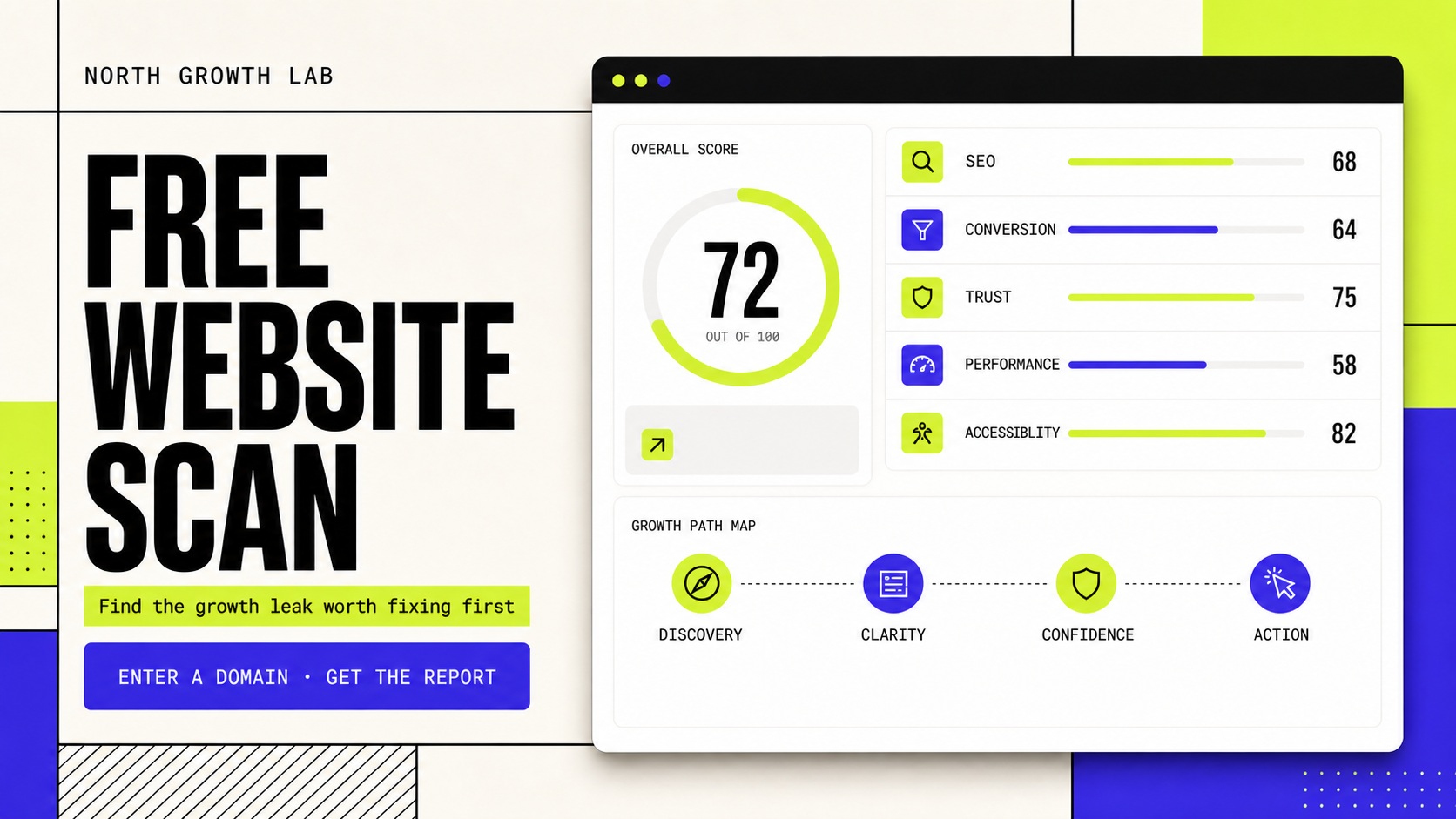
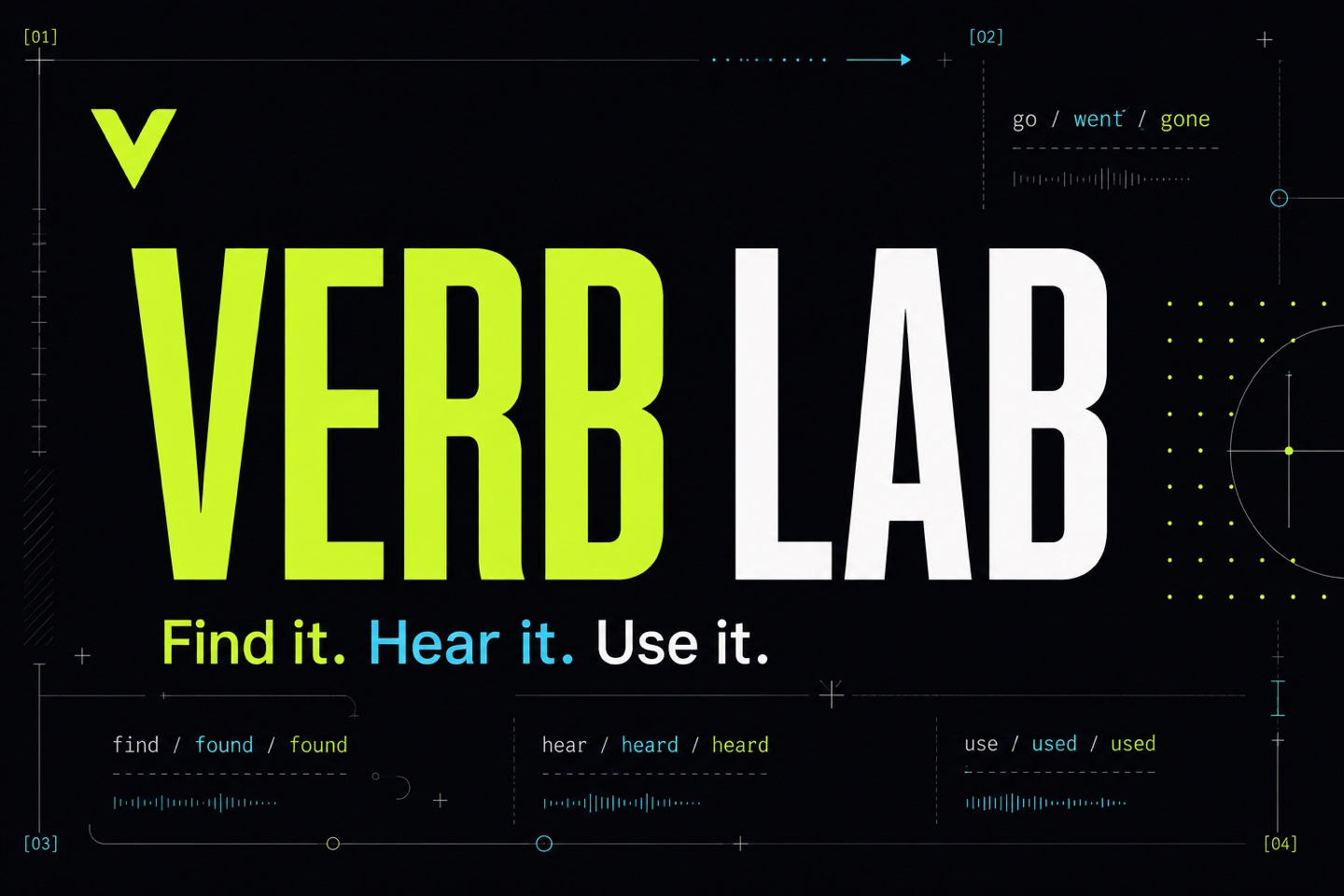
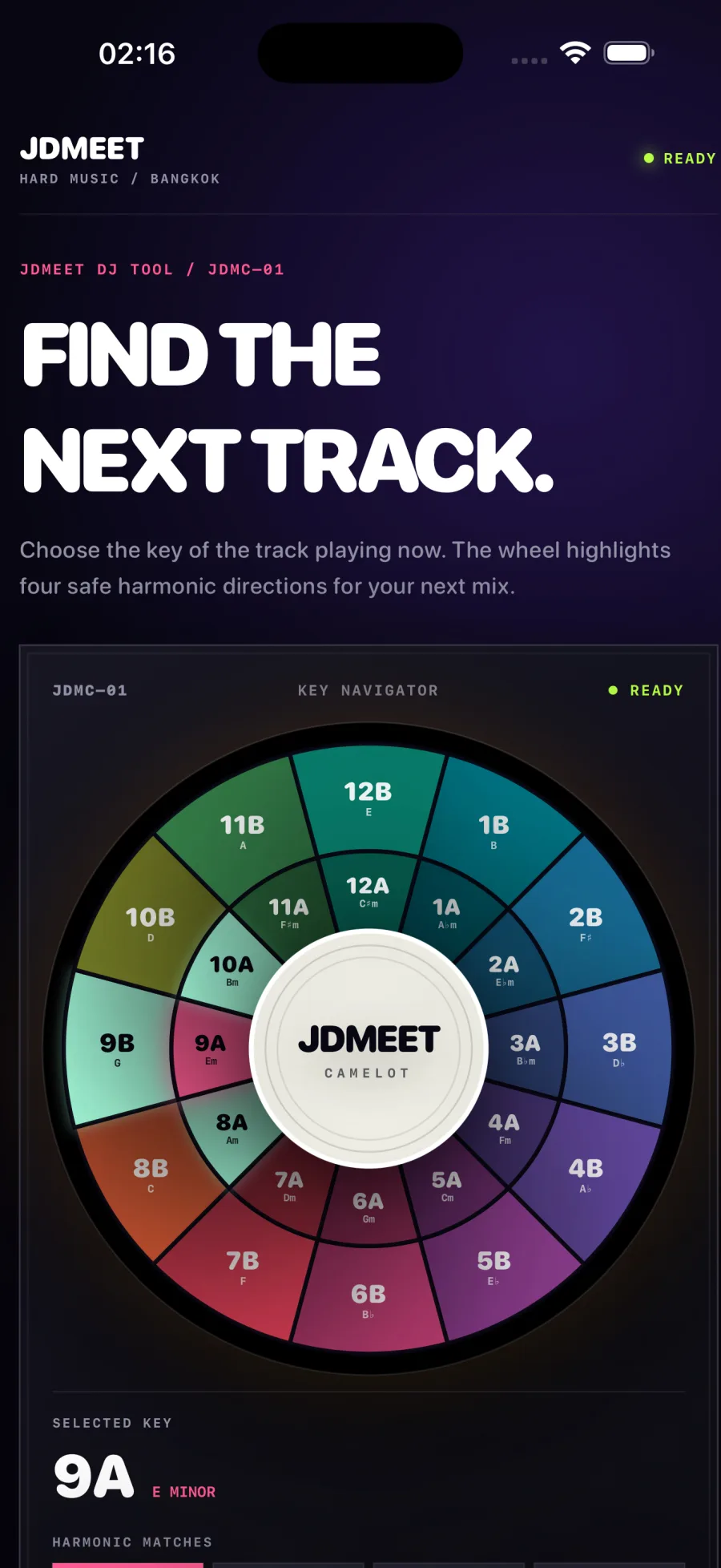
Client websites, our own working products and native apps. Two selected hospitality and brand concepts are clearly labelled.
LIVE PRODUCT
WE ARE MK STUDIO
A marketing studio with a personal point of view.
About this project
A complete identity and website for Madina Kabidenova’s marketing studio. The MK monogram, blue palette and scroll-controlled film lead into case studies and a callback form connected to Telegram and corporate email.
Our live JD Studio website brings web design, application development and automation into one studio identity, with motion-led storytelling, selected work and a direct project enquiry path.
An artist website for a Bangkok-based DJ performing across Asia. Live-session video, selected SoundCloud mixes and direct Telegram booking bring his sound and identity together.
Learn verbs in your browser. Keep practising on iPhone.
About this project
A language-learning website and native iPhone app for English and other languages. Search verbs, explore conjugation tables, listen to pronunciation and practise active recall with multilingual explanations. The web version works on phones, tablets and desktop browsers.
An offline harmonic-mixing companion for iPhone and iPad. Choose a key on the 24-key Camelot wheel to see compatible neighbours and relative major or minor keys. Includes haptic feedback and VoiceOver support, with no account or advertising.
A practical scope for website maintenance, monitoring, backups, lead delivery, reporting and accountable support—plus the items that need separate approval.
Map a Google Ads landing-page lead from accepted form to delivery, qualification and customer outcome with a practical search-to-sale measurement plan.
A copy-ready Google Ads landing page brief connecting search intent, ad promise, proof, qualification, tracking, lead routing and launch acceptance before design begins.
A practical framework for deciding whether to redesign the current website, rebuild the platform or improve the highest-leverage pages without replacing everything.
A realistic website redesign or rebuild timeline covering discovery, copy, development, content and SEO migration, integrations, quality assurance and launch.
Web application development typically costs $10,000–$100,000+, depending on workflows, roles, data, integrations and risk. Compare practical 2026 scope bands.
How North Growth Lab designed and built a responsive six-pad rhythm sampler with real audio, rapid retriggering and live waveform feedback for the JDMEET artist website.
Landing page or website for Google Ads? Use a six-check decision matrix, hotel and design-studio examples, and a practical brief to choose the right destination.
A transparent guide to landing-page scope, cost drivers and budgeting for businesses that need qualified leads from paid search—not a decorative one-page design.
A practical decision framework for choosing a website, web application, iOS or Android app—and knowing when the business needs a connected combination.
Compare iOS, Android and simultaneous mobile development by audience, product behavior, device requirements, release operations and commercial evidence.
How we rebuilt our studio website around real projects, distinct service pages and crawlable content, with a practical release record and clear measurement limits.
Custom Booking System Development: 12 Requirements Before You Build
Updated August 16, 2026
Define availability, capacity, payments, waitlists, integrations, recovery and ownership before estimating a custom booking system.
This is a product-planning framework, not a booking-platform endorsement, integration guarantee, security, payment, accessibility, legal or regulatory assessment. The gym, appointment-led service and resource-booking examples are illustrative scopes—not North Growth Lab client case studies or outcome claims.
A booking system is an operating workflow—not a calendar with a checkout button.
A customer sees an available class, appointment, room, vehicle or piece of equipment and expects one clear result. Behind that action, the system may need to evaluate staff, location, duration, buffers, capacity, membership, payment, external calendars and business rules before it can safely confirm anything. Staff then need a way to cancel, move, refund, reconcile and recover the booking without editing a database.
That is why custom booking system development should not start with screens or a generic feature list. First define what is being reserved, which system owns availability, how an offered slot becomes held and confirmed, what prevents conflicting reservations and who acts when payment, calendar synchronization or notification delivery fails.
Use this checklist before requesting estimates. It turns twelve product decisions into evidence, acceptance tests, owners and failure responses so an established scheduling product, an integration layer and a custom build can be compared against the same operational boundary.
Choose buy, integrate, custom web or native app before choosing features.
An established scheduling product is usually the responsible first choice when the business offers standard one-to-one appointments or classes, can adapt to the product's rules and does not need unusual customer, pricing or operational workflows. Buying reduces the amount of availability, payment, messaging, security and support behavior the business must own.
An integration layer becomes useful when the existing scheduler should remain the booking authority but the public website, membership system, CRM, access control or reporting needs a governed connection. A custom web application is justified when the booking itself contains distinct resource, entitlement, pricing, approval or multi-party rules that off-the-shelf tools cannot represent economically.
A native mobile app adds store review, installation, device support, release and ongoing maintenance. It earns that burden when repeated use, membership, location context, device access, offline behavior or time-sensitive notifications create durable customer value. A responsive web booking path should remain the default for search discovery and occasional use unless evidence supports an install.
Situation
Standard appointments with one staff calendar
Useful first choice
Established scheduling product
Evidence required to go further
A material rule or connected workflow the product cannot support
Situation
Existing scheduler plus website, CRM or access system
Useful first choice
Governed integration layer
Evidence required to go further
Verified API access, identity mapping and failure ownership
Situation
Distinct resources, entitlements, approvals or pricing
Useful first choice
Custom responsive web application
Evidence required to go further
A complete booking state model and operating owner
Situation
Frequent member or field behavior
Useful first choice
Web foundation, then native app if justified
Evidence required to go further
Repeated use or device capability that offsets install and support cost
Situation
Unclear rules and no post-launch owner
Useful first choice
Wait and map the operation
Evidence required to go further
Named decisions, source of truth and recovery responsibility
Copy this booking state ledger before requesting an estimate.
Create one row for every launch-critical booking decision. Evidence before estimate reveals unknown rules, access and ownership before they become change requests. The acceptance test names an observable outcome. The owner is accountable for the business state—not automatically the developer. The failure response explains what customers and staff can do when the ideal path does not happen.
Keep unknowns visible. If the business has not confirmed calendar API access, cancellation rules or who reconciles payment without a booking, a proposal should not quietly assume them. A finished interface is not a finished booking system when operations cannot explain which record is authoritative.
Decision
Bookable resource
Evidence before estimate
Resource, duration, capacity, dependencies and location
Acceptance test
Every offered option represents valid inventory
Owner
Operations owner
Failure response
Stop or substitute without promising impossible availability
Decision
Availability truth
Evidence before estimate
Named authoritative system and synchronization boundary
Acceptance test
A source change reaches every scoped surface once
Owner
Product owner
Failure response
Show a safe unavailable state and create a reconciliation task
Decision
Final-slot acceptance
Evidence before estimate
Hold, expiry, conflict and retry rules
Acceptance test
Two simultaneous requests for one place produce one confirmation
Owner
Application owner
Failure response
Reject or waitlist clearly and release stale holds
Decision
Payment
Evidence before estimate
Deposit, capture, refund and booking-confirmation sequence
Acceptance test
Approved, declined and ambiguous outcomes reconcile
Owner
Finance and operations
Failure response
Resolve payment without booking and booking without payment
Decision
Staff exception
Evidence before estimate
Roles, override reasons and audit needs
Acceptance test
Authorized staff resolve normal exceptions without engineering
Owner
Service manager
Failure response
Escalate with complete booking and event history
Decision
Recovery and handoff
Evidence before estimate
Monitoring, backups, accounts, runbook and support boundary
Acceptance test
The owner can detect, explain and recover a failed flow
Owner
Client and delivery owner
Failure response
Use a rehearsed fallback and named escalation path
Define the booking states before designing every screen.
At minimum, distinguish available, held, confirmed, cancelled, completed and no-show. A payment-pending, waitlisted, rejected or expired state may also be necessary. For each transition, name the actor or system allowed to trigger it, the evidence stored, whether it can be reversed and what the customer sees.
Displayed availability is a read. A temporary hold protects a customer while required steps are completed. Confirmation is the authoritative write that consumes capacity. Treating those moments as one optimistic action creates double bookings, stale inventory and support cases that no confirmation email can repair.
Keep an event history for important transitions rather than overwriting the previous truth. Staff need to know whether a booking was cancelled by the customer, expired after a hold, rejected by an integration or changed through an authorized override. Finance and support need the same explanation when money and capacity disagree.
State
Available
Meaning
The current rules permit the resource to be offered
Typical next states
Held or unavailable
State
Held
Meaning
Capacity is temporarily protected while required steps finish
Typical next states
Confirmed, expired or cancelled
State
Confirmed
Meaning
The authoritative booking record has accepted the reservation
Typical next states
Completed, rescheduled, cancelled or no-show
State
Waitlisted
Meaning
The customer may be promoted if capacity becomes available
Typical next states
Held, expired or withdrawn
State
Cancelled
Meaning
The booking no longer consumes capacity under defined rules
Typical next states
Refunded, credited or closed
State
Completed / no-show
Meaning
The service outcome is recorded for operations and reporting
Typical next states
Closed or reviewed
Requirement 1: name the resource, capacity and dependencies.
Staff time, a class place, a room, a table, a vehicle and a bundle of equipment are different inventory models. A personal-training session may require one trainer and one room. A gym class reserves one place from a shared capacity. Equipment rental may require the item, a pickup window and a deposit. Write the actual resource graph before treating each option as a rectangular calendar slot.
Define duration, preparation and cleanup buffers, location, minimum and maximum capacity, dependent resources, eligibility and the rule for changing them. If moving an instructor or changing room capacity affects existing bookings, specify whether customers remain confirmed, need approval or receive a clear alternative.
Acceptance should prove that every offered option represents valid inventory at the moment it is displayed and again when it is confirmed. It should also test dependency loss: the room closes, the instructor becomes unavailable or one item in a bundle is removed.
Requirement 2: choose one authoritative source of availability.
A booking product can read staff calendars, membership data, room schedules or an existing reservation platform, but it still needs one authority for the final booking decision. List which system may create, block, move and cancel inventory and how changes reach the customer and staff surfaces.
Google Calendar's Freebusy API, for example, returns busy intervals for calendars the application is authorized to query. That can inform availability. It does not know the business's class capacity, membership eligibility, equipment dependency or whether the custom booking record was accepted. Calendar visibility and booking acceptance are related but separate states.
Use the narrowest appropriate authorization scope and verify account ownership, consent, access removal and token failure. Never assume that a platform's public API documentation proves the business has account access, completed verification or the right commercial plan.
Requirement 3: protect the final constrained slot from conflicting requests.
The critical test is not whether one customer can book an empty schedule. It is what happens when two valid customers attempt to consume the final place at nearly the same time. The authoritative write must accept one permitted result and give the other customer a clear rejection, alternative or waitlist outcome.
Temporary holds need an expiry rule and a release path. Retries need a stable request identity or equivalent duplicate protection so a timeout does not create a second booking. A customer refreshing the page, tapping twice or returning after a network interruption should reach the existing logical result when appropriate—not create new inventory consumption.
Choose the implementation from the actual data store, integrations, load and failure model. A database constraint, transaction, queue or serialized resource owner can all be relevant in different systems. The acceptance condition matters more than naming a fashionable architecture in the proposal.
Requirement 4: specify time zones, daylight changes and recurrence.
Record an unambiguous instant for each occurrence and preserve the business time zone needed to explain it. A customer travelling across zones, a location changing daylight-saving offset and a recurring class defined as local wall time can otherwise see different answers from systems that each appear internally correct.
RFC 5545 provides widely used iCalendar vocabulary for UIDs, recurrence rules, exceptions and time-zone references. Supporting iCalendar data does not automatically resolve the business decision. The scope still needs to say what happens to future bookings when a weekly class changes from 18:00 to 19:00, when one occurrence is cancelled or when a location's time-zone rule changes.
Acceptance should cover customer and location zones, daylight transitions, an all-day or date-only resource if relevant, recurring-series edits, single-occurrence exceptions and notification timing. Store the decision people need to understand, not only a formatted date string.
Requirement 5: define identity, membership and entitlement rules.
Decide whether a customer can book as a guest, must create an account or must hold an active membership, package credit, invitation or approval. Define when entitlement is checked, when a credit is consumed, how it is restored after cancellation and what happens when the membership changes before the appointment occurs.
Do not force registration when the business only needs one low-risk appointment and the account creates no customer value. Do require sufficient identity and authorization when a booking controls scarce inventory, purchased credits, restricted access or another person's schedule.
Staff access needs separate roles. A receptionist may create and move bookings; an instructor may view an assigned schedule; a manager may override capacity with a reason; finance may issue a refund. Account removal, staff departure and customer-data access must be part of the acceptance boundary.
Requirement 6: place payment and booking confirmation in one explainable sequence.
Define whether payment is optional, a deposit, a full charge, an authorization or a package-credit deduction. Then name exactly when capacity becomes held and confirmed. A successful payment without an accepted booking and a confirmed booking without the required payment are both normal failure cases that need deliberate reconciliation.
List decline, abandonment, timeout, duplicate callback, cancellation, partial refund, credit restoration, dispute and manual adjustment. Keep sensitive payment data inside the appropriate provider boundary and give staff an auditable recovery path rather than direct record editing.
Acceptance should start from the customer action and trace the booking, payment or credit record, staff view, notification and finance outcome. A green checkout screen is not enough if the authoritative capacity record or settlement record disagrees.
Requirement 7: make cancellation, reschedule, no-show and waitlist rules explicit.
Define cutoffs, fees, deposit treatment, credit restoration, who may reschedule, whether capacity is released immediately and what evidence a staff override stores. Different appointment types or memberships may have different rules; make those differences configurable and visible before the customer confirms.
A waitlist needs an ordering rule, promotion trigger, response window, expiry and staff override. Decide whether the next customer receives a temporary hold, how many people can be notified and what happens when several customers respond. A generic message to everyone can recreate the same final-slot race outside the application.
No-show status affects operations, customer eligibility and sometimes money. Define who records it, when it becomes final, how a customer disputes it and whether future booking rights change. Avoid automated punishment based on an ambiguous integration state.
Requirement 8: design staff exceptions before the happy path ships.
Operations need controlled ways to block time, close a location, move a resource, change capacity, create a phone booking, correct customer details, promote a waitlist entry, waive a rule, cancel, refund and reconcile an external-system mismatch. If normal exceptions require an engineer or raw database access, the booking product is not operationally complete.
For each action, define the role, reason, customer communication, payment effect, audit record and reversibility. An override should not silently make the public schedule and staff schedule disagree. The customer should not receive a success message until the authoritative state supports it.
Acceptance should use real staff roles and incomplete information. Ask a permitted user to resolve a missed payment callback or instructor absence, and verify that an unpermitted user cannot perform the same action.
Requirement 9: choose the smallest customer and staff surfaces that complete the job.
The first release may need a public mobile web flow, a customer account and a staff console. An embedded widget, kiosk and native iOS or Android app are separate surfaces with separate accessibility, authentication, release and support obligations. Do not include all of them simply because they appear on a competitor feature grid.
Customer tasks should work with clear labels, visible keyboard focus, useful error messages, adequate touch targets and without horizontal page scrolling. A complex schedule grid needs an equivalent usable path on a narrow screen and for people who do not navigate visually. WCAG 2.2 is a useful accessibility reference, but the project must evaluate the criteria relevant to its actual surfaces and cannot make a blanket legal promise from a checklist.
Staff need dense operational information without losing task clarity. Show the authoritative state, resource, payment or credit status, exception history and allowed next actions together. A decorative calendar that hides conflicts behind color alone is not sufficient.
Requirement 10: define integrations as contracts with failure behavior.
Calendar, CRM, membership, payment, access control, POS, video, messaging and analytics integrations should each name the authoritative data, identity mapping, authentication, scopes, limits, webhooks or polling, retry policy, duplicate handling, support owner and degraded behavior. `Integrates with Google Calendar` is not a complete requirement.
Google Calendar allows an application to provide an event ID when creating an event, which can help avoid duplicate event creation after an ambiguous retry. That is useful integration behavior, not a replacement for the booking application's own authoritative acceptance rule. The product still needs to reconcile when one system accepted a write and another did not.
Acceptance should disconnect or delay each launch-critical dependency. The booking flow must either stop safely, queue with a visible state or use a documented manual path. Unlimited invisible retries can turn an outage into duplicates, stale notifications and unexpected provider cost.
Requirement 11: protect reservation flows from abuse and excess automation.
OWASP API Security Top 10 identifies reservation as a sensitive business flow because automated access can consume every available slot and prevent legitimate customers from using the service. Authentication alone does not solve that business risk when valid or disposable accounts can still reserve capacity at scale.
Define which flows can materially harm the operation: searching availability, creating holds, confirming scarce slots, joining waitlists, using promotional credits or cancelling repeatedly. Apply limits and monitoring that fit the resource, customer and business model. Human verification, rate boundaries, account history, payment or entitlement checks and review queues can be relevant; no single mechanism is universally sufficient.
Acceptance should test bursts, repeated holds that expire, duplicate accounts if they are a real risk, enumeration of other customers' bookings, unauthorized staff actions and alerting. The goal is to preserve legitimate access while making harmful automation observable and expensive.
Requirement 12: define release, recovery and post-launch ownership.
Name the production accounts, repositories, environments, domains, data stores, provider contracts, secrets, monitoring, backups, deployment and support ownership before launch. Decide who handles a customer complaint, failed integration, stale hold, payment mismatch and location-wide schedule correction—and during which support hours.
Acceptance should include logs that explain a failed booking, alerts for material workflow loss, a reconciliation queue, backup and restore evidence, deployment and rollback, data export, staff runbook, open-risk record and access revocation. NIST's Secure Software Development Framework is a useful source for secure-development and release practices; it is not a certification claim.
The smallest responsible handoff leaves the client able to operate the normal workflow, see material failures and control the agreed accounts and artifacts. Ongoing support may be included or separate, but it should never remain an implied promise after production begins.
Compare three illustrative booking scopes without pretending they are the same product.
These examples show how the same ledger produces different systems. They are illustrative scopes, not North Growth Lab client work, revenue evidence or promises about a specific industry's regulatory needs.
Illustrative scope
Gym class booking
Likely first surface
Responsive member booking plus staff console
Distinct acceptance focus
Class capacity, membership entitlement, waitlist promotion, instructor/room change and credit restoration
Illustrative scope
Appointment-led service
Likely first surface
Mobile web booking with customer confirmation and operations view
Distinct acceptance focus
Staff and room dependencies, buffers, deposits, cancellation cutoff and authorized reschedule
Illustrative scope
Equipment or space booking
Likely first surface
Searchable web application with account and pickup workflow
Distinct acceptance focus
Multi-resource availability, hold expiry, deposit, access handoff, return evidence and damage exception
Estimate from rules, states and operating responsibility—not the number of pages.
The largest effort drivers are resource and capacity rules, identity and entitlements, booking states, customer and staff surfaces, payments, waitlists, external systems, migration, accessibility, reporting, abuse controls, recovery and support boundaries. A five-screen interface can be more complex than a twenty-page website when each action changes scarce operational inventory.
Ask every proposal to list assumptions, exclusions, supplied access, acceptance evidence, launch responsibilities and post-launch ownership. Compare whether each proposal includes the same booking authority, conflict test, payment reconciliation, staff exceptions and dependency failures before comparing the total price.
Do not trust a universal timeline or price band detached from the rules. A standard appointment widget and a multi-location membership product with dependent resources, access control and native apps are different investments even if both are described as `online booking`.
Which resource and capacity rules are included in the first release?
Which system owns final availability and confirmation?
How are holds, retries and simultaneous final-slot requests accepted?
Which payment, entitlement, cancellation and waitlist cases are in scope?
Which customer and staff surfaces are required at launch?
Which integrations are verified, and what happens when each one fails?
Which release, recovery, support and handoff evidence is included?
Custom booking system development FAQ.
What are the core requirements for a custom booking system?
Define the bookable resources, capacity, authoritative availability, booking states, temporary holds, conflict rule, time zones, identity or entitlement, payment sequence, cancellation and waitlist policy, staff exceptions, integrations, abuse controls, accessibility, recovery and post-launch owner. Each requirement needs an observable acceptance test and failure response.
How do booking systems prevent double bookings?
The authoritative booking write must accept only valid remaining capacity, even when requests arrive concurrently. The implementation may use database constraints, transactions, queues or serialized ownership depending on the system. Test two simultaneous requests for the final slot, temporary-hold expiry and ambiguous retries; one customer should receive confirmation and the other a clear alternative, rejection or waitlist state.
Should a business build custom booking software or buy an existing platform?
Buy an established product when the workflow is standard and the business can adapt to its rules. Integrate or build when distinct resources, entitlements, approvals, pricing, customer experience or connected operations create material value that available products cannot support economically. Also require a team able to own support and recovery after launch.
Can a custom booking system sync with Google Calendar?
Yes, subject to the business's account access, authorization, API limits and exact scope. Free/busy intervals can inform availability, and events can be created or updated. The booking product still needs its own authoritative acceptance, duplicate, reconciliation and failure rules because calendar visibility is not the same as confirmed operational capacity.
Does a gym booking system need a mobile app?
Not automatically. A responsive member web application can support class discovery, booking, waitlists and accounts without an install. A native app becomes more defensible when frequent use, membership, device access, push behavior or on-site workflows create sustained value that justifies store release and ongoing support.
What affects custom booking system development cost?
Cost depends on resource and capacity rules, booking states, customer and staff surfaces, identity and memberships, payments, waitlists, integrations, data migration, accessibility, security, reporting, recovery, launch and support ownership. A reliable estimate needs those boundaries and acceptance tests rather than a generic feature count.
What should be tested before a booking system launches?
Test simultaneous requests for scarce capacity, holds and expiry, duplicate retries, time zones and recurrence, payment and booking mismatches, cancellations and waitlists, role boundaries, staff overrides, dependency outages, notifications, mobile and keyboard task completion, abuse cases, logs, restore or recovery, data export and the operating runbook.