Client websites, our own working products and native apps. Two selected hospitality and brand concepts are clearly labelled.
LIVE PRODUCT
WE ARE MK STUDIO
A marketing studio with a personal point of view.
About this project
A complete identity and website for Madina Kabidenova’s marketing studio. The MK monogram, blue palette and scroll-controlled film lead into case studies and a callback form connected to Telegram and corporate email.
Our live JD Studio website brings web design, application development and automation into one studio identity, with motion-led storytelling, selected work and a direct project enquiry path.
An artist website for a Bangkok-based DJ performing across Asia. Live-session video, selected SoundCloud mixes and direct Telegram booking bring his sound and identity together.
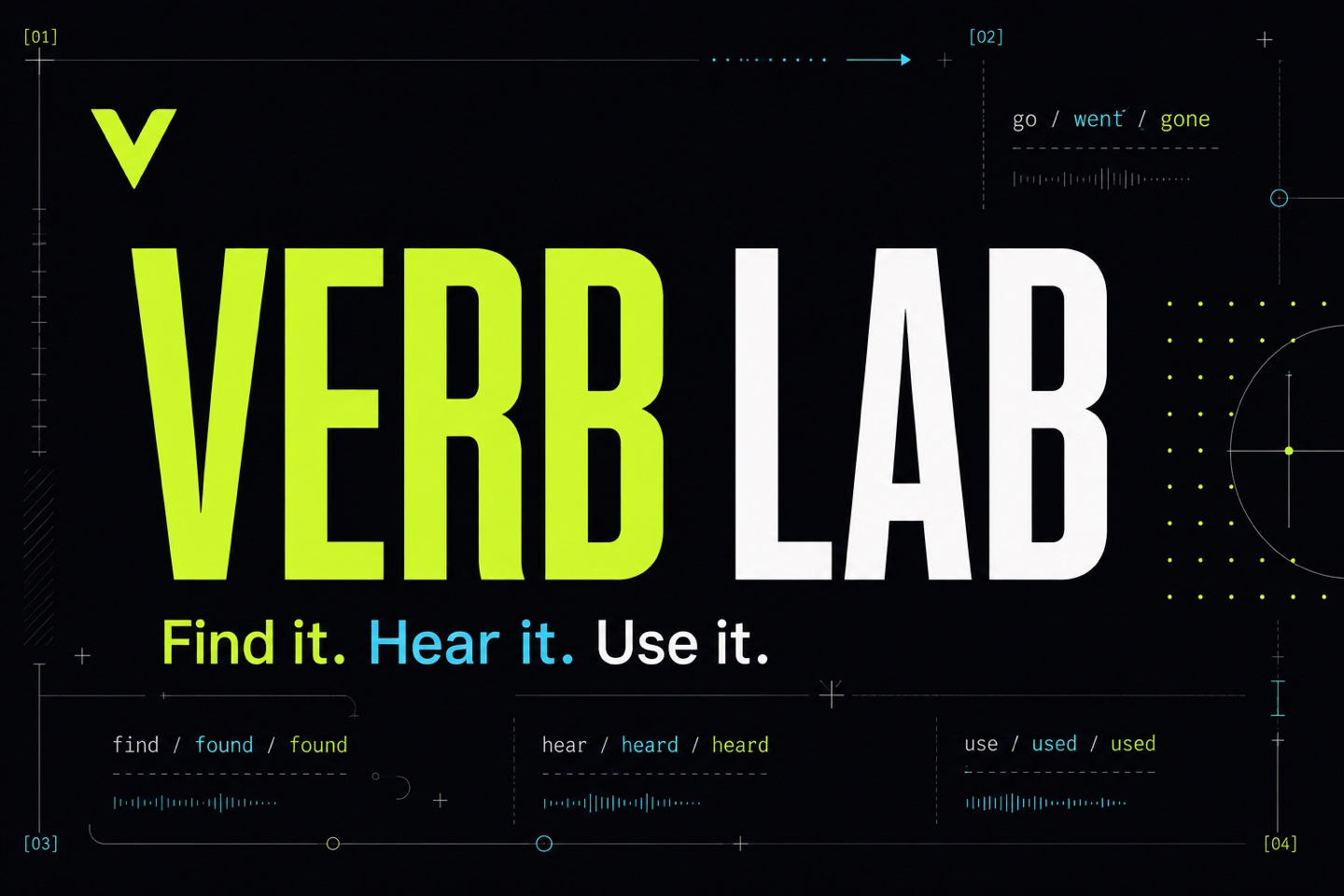
Learn verbs in your browser. Keep practising on iPhone.
About this project
A language-learning website and native iPhone app for English and other languages. Search verbs, explore conjugation tables, listen to pronunciation and practise active recall with multilingual explanations. The web version works on phones, tablets and desktop browsers.
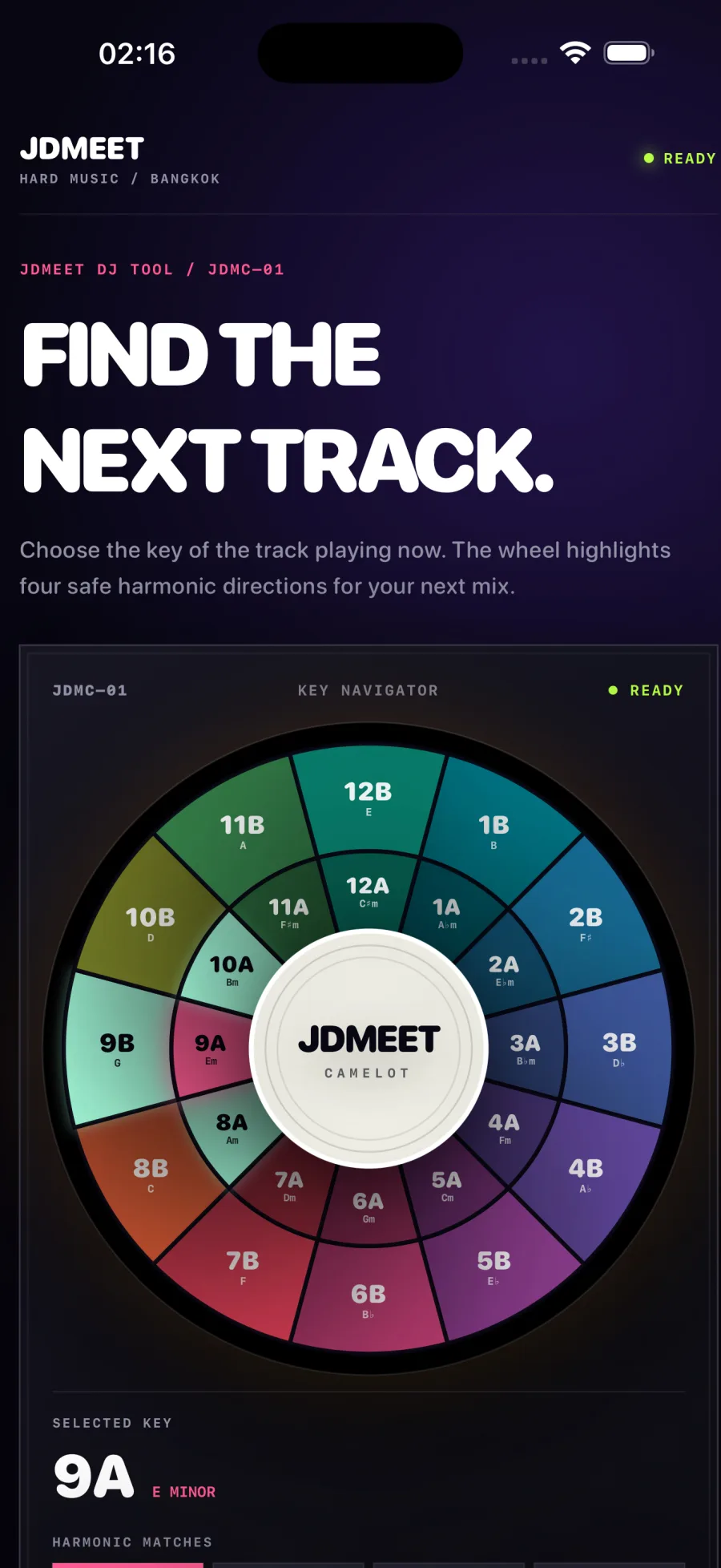
An offline harmonic-mixing companion for iPhone and iPad. Choose a key on the 24-key Camelot wheel to see compatible neighbours and relative major or minor keys. Includes haptic feedback and VoiceOver support, with no account or advertising.
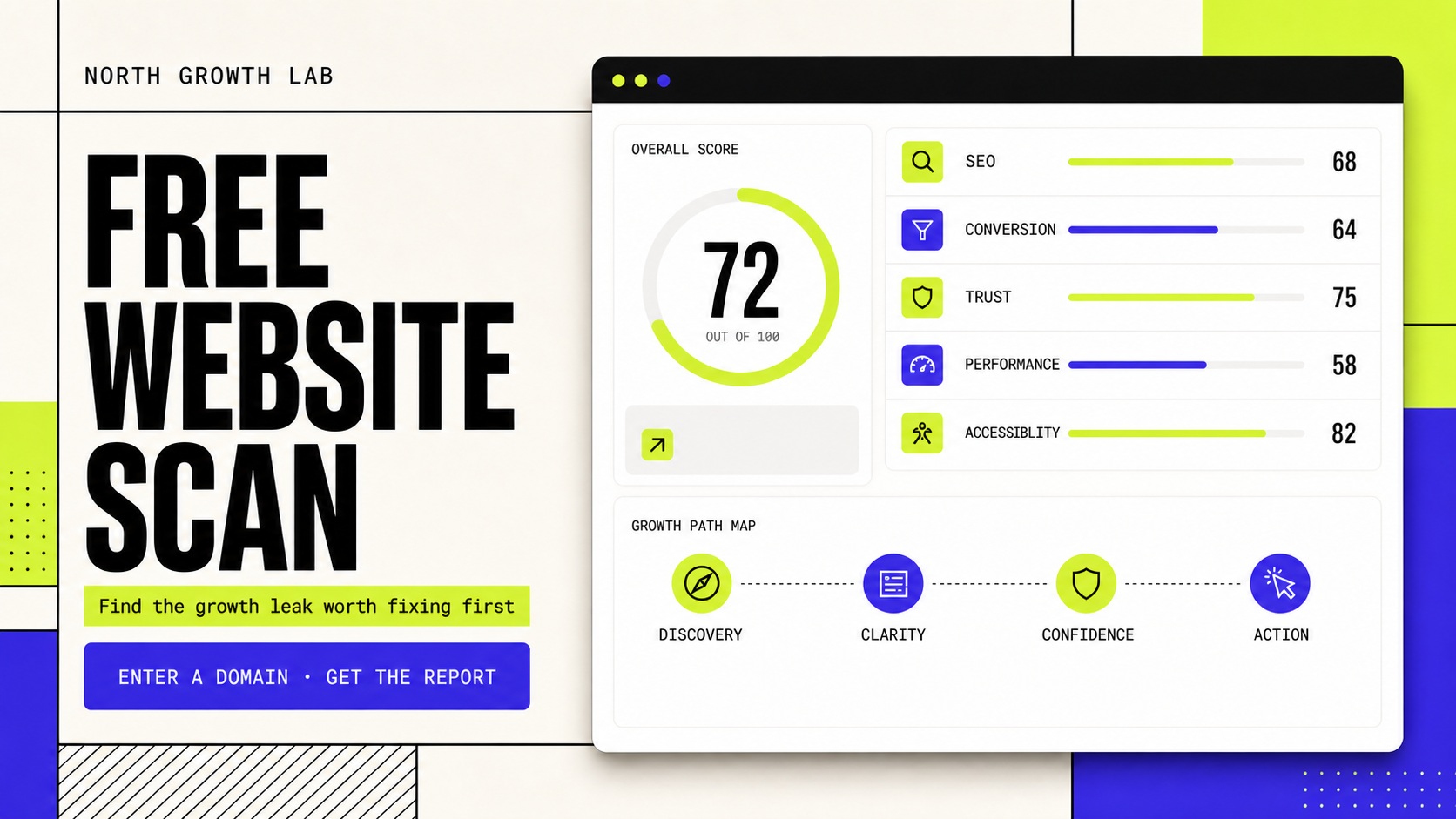
A practical scope for website maintenance, monitoring, backups, lead delivery, reporting and accountable support—plus the items that need separate approval.
Map a Google Ads landing-page lead from accepted form to delivery, qualification and customer outcome with a practical search-to-sale measurement plan.
A copy-ready Google Ads landing page brief connecting search intent, ad promise, proof, qualification, tracking, lead routing and launch acceptance before design begins.
A practical framework for deciding whether to redesign the current website, rebuild the platform or improve the highest-leverage pages without replacing everything.
A realistic website redesign or rebuild timeline covering discovery, copy, development, content and SEO migration, integrations, quality assurance and launch.
Web application development typically costs $10,000–$100,000+, depending on workflows, roles, data, integrations and risk. Compare practical 2026 scope bands.
How North Growth Lab designed and built a responsive six-pad rhythm sampler with real audio, rapid retriggering and live waveform feedback for the JDMEET artist website.
Landing page or website for Google Ads? Use a six-check decision matrix, hotel and design-studio examples, and a practical brief to choose the right destination.
A transparent guide to landing-page scope, cost drivers and budgeting for businesses that need qualified leads from paid search—not a decorative one-page design.
A practical decision framework for choosing a website, web application, iOS or Android app—and knowing when the business needs a connected combination.
Compare iOS, Android and simultaneous mobile development by audience, product behavior, device requirements, release operations and commercial evidence.
How we rebuilt our studio website around real projects, distinct service pages and crawlable content, with a practical release record and clear measurement limits.
Restaurant App Development: 12 Scope Decisions Before You Build
Updated August 16, 2026
Define restaurant app scope across ordering, menus, payments, POS, staff workflows, loyalty, failures and ownership before requesting an estimate.
This is a product-planning framework, not a restaurant technology endorsement, integration guarantee, payment, security, accessibility, legal or regulatory assessment. The café, restaurant-group and reservation-led examples are illustrative scopes—not North Growth Lab client case studies or outcome claims.
A restaurant app should start with the operating system—not the screens.
Restaurant app development is rarely one isolated mobile interface. A customer may discover the restaurant on the web, browse a live menu, choose a location, place an order, pay, receive status updates and return through loyalty. Behind that journey, staff must publish availability, accept or reject the order, prepare it in the correct location, resolve exceptions, reconcile payment and support the customer. Every surface depends on the same operational truth.
That is why the first scope decision is not iOS versus Android or which framework to use. It is which recurring job the system must improve, which system owns each important state and what evidence proves the result is safe to operate. A native app may be part of the answer. It should not be the default answer simply because the business wants an app.
Use this guide before requesting estimates. It turns twelve decisions into observable acceptance conditions, named owners and failure responses so two proposals can be compared on the same business boundary rather than on different feature lists.
Decide whether the restaurant needs an app at all.
A native app adds installation, store review, release, device-support and ongoing maintenance obligations. It earns those obligations when it makes a repeated behavior meaningfully better: frequent reordering, saved preferences, loyalty, location-aware service, membership or time-sensitive customer actions. The business should be able to name the expected recurring job and why the customer would keep the app after completing it once.
A mobile website is usually the lower-friction first surface for search discovery, first visits, menu browsing, occasional pickup orders, events and reservations. A responsive web application can also support accounts and transactions without an app-store install. Proving the workflow on the web does not prevent native development later; it can reveal which behaviors deserve device-specific investment.
Customer situation
First visit from search, maps or social
Useful first surface
Fast mobile website
Evidence before a native app
Repeated post-visit behavior that a browser path cannot serve well
Customer situation
Occasional menu, pickup or reservation
Useful first surface
Mobile web ordering or booking
Evidence before a native app
Return frequency, saved value or device capability that offsets install friction
Customer situation
Frequent ordering across locations
Useful first surface
Web ordering plus account foundation
Evidence before a native app
Verified repeat use, location rules and a stable shared backend
Customer situation
Loyalty-led retention program
Useful first surface
Account and loyalty rules first
Evidence before a native app
Clear earn, redeem, refund, consent, support and financial ownership
Customer situation
Staff-only recurring workflow
Useful first surface
Responsive operations console
Evidence before a native app
A device-specific job such as scanning, location hardware or offline use
Copy this restaurant system scope ledger before requesting an estimate.
Create one row for every launch-critical decision. Evidence before estimate exposes unknown access, rules and ownership before they become change requests. The acceptance test states an observable production result. The owner is the person accountable for the business state—not automatically the developer. The failure response explains what the customer and staff can do when the ideal path does not happen.
Keep explicit unknowns. If the restaurant has not confirmed POS API access, the proposal should not quietly assume a complete real-time integration. If refunds, unavailable items or delayed orders have no operational owner, the scope is not ready merely because the checkout screens are approved.
Decision
Customer job
Evidence before estimate
Named user, trigger, frequency and completed outcome
Acceptance test
First-time and returning customers complete the chosen job
Owner
Product owner
Failure response
Keep a usable guest or mobile-web path
Decision
Menu truth
Evidence before estimate
Source, locations, modifier model and publishing owner
Acceptance test
One approved change reaches every scoped surface once
Owner
Restaurant operations
Failure response
Stop sale or mark unavailable; never silently use a stale price
Decision
Order acceptance
Evidence before estimate
State model, duplicate rule and downstream acknowledgement
Acceptance test
A timed-out retry cannot create a second payable order
Owner
Application owner
Failure response
Reconcile by stable order key and show a definitive status
Decision
Payment and refund
Evidence before estimate
Merchant, processor, token, tip, tax and refund boundary
Acceptance test
Approved, declined, abandoned and partial-refund paths reconcile
Owner
Finance and operations
Failure response
Auditable manual recovery plus customer-safe message
Decision
POS or KDS
Evidence before estimate
Access, sandbox, limits, events and unsupported cases
Acceptance test
A valid order reaches the correct location; an invalid one fails visibly
Owner
Integration owner
Failure response
Queue, retry or named manual intervention
Decision
Fulfilment
Evidence before estimate
Pickup, delivery, dine-in, reservation and capacity rules
Acceptance test
Closed, full, late and unavailable states prevent impossible promises
Owner
Location operator
Failure response
Offer a valid alternative or stop checkout
Decision
Notifications
Evidence before estimate
Authoritative status, consent and delivery provider
Acceptance test
Duplicate or late events cannot send a false state
Owner
Support and operations
Failure response
In-product status remains authoritative
Decision
Staff exceptions
Evidence before estimate
Roles, rejection, substitution, refund and audit flow
Acceptance test
Authorized staff resolve an exception without database access
Owner
Restaurant manager
Failure response
Named escalation and customer communication
Decision
Recovery and handoff
Evidence before estimate
Backups, monitoring, repositories, accounts and runbooks
Acceptance test
The owner can deploy, revoke access, restore and explain open risks
Owner
Client and delivery owner
Failure response
Rehearsed recovery path and escalation boundary
Decision 1: name the repeated customer job that earns an install.
Choose one primary job for the first release: reorder a usual meal, collect and redeem loyalty, reserve a table, join a waitlist, manage a subscription or interact during an on-premise visit. Describe who performs it, how often, what they do today and what result would make the new path worth returning to. `Customers can order` is a capability; it is not yet a reason to install.
Acceptance should compare first-time and returning behavior. A first-time customer needs discovery, clear location and menu context, guest access and trustworthy payment. A returning customer may benefit from saved location, favorites, preferences and order history. If the repeated path is not materially stronger, keep the mobile website as the primary customer surface and preserve native development as a measured later decision.
Decision 2: define the location, menu and availability source of truth.
A restaurant menu is structured operational data, not only content. Location, channel, time, category, item, variation, modifier, price, tax, image, allergen statement and availability can change the valid order. Define which system may create and change each field, how changes reach customer surfaces and who verifies the published result.
Square's official Catalog API, for example, models items, variations, categories, discounts, taxes and modifiers. Toast's Menus API can provide a fully resolved menu and a metadata check for stale data. These are useful examples of the mapping work; they are not proof that a particular restaurant has access or that either platform is the correct choice.
Acceptance needs freshness and failure behavior. Test a price change, a sold-out item, a modifier update, a location-specific menu and a stale synchronization event. Decide whether checkout stops, an item becomes unavailable or staff receive a recovery task. Showing a cached menu with an unfulfillable price is not a harmless content delay.
Decision 3: list every surface that can create or change an order.
The public website, web ordering flow, iOS app, Android app, kiosk, staff console, delivery marketplace and phone-assisted order entry should not invent separate versions of the same transaction. List which surfaces can create, edit, cancel, refund or complete an order and which system records the authoritative result.
Then define identity across channels. A guest web order may later appear in an account. A customer may begin on the website and continue in the app. Staff may correct a location or fulfilment time. The system needs stable order and customer references without forcing every first purchase behind registration or merging people on weak evidence.
A thin production slice should cross one surface, one valid menu, one location, one payment and one staff acceptance path before additional channels are added. This proves the shared transaction model instead of multiplying screens around an untested core.
Decision 4: make modifiers, allergens and unavailable items testable.
Modifiers can change price, preparation and whether an item is valid. Define required choices, minimum and maximum selections, incompatible combinations, pre-modifiers, location differences and what happens when a saved favorite is no longer available. Free-text instructions should not silently override structured rules the kitchen must follow.
Allergen and dietary information needs a named content source, review owner and clear limitations appropriate to the restaurant's actual process. Software can present supplied information and required acknowledgements; it cannot guarantee a kitchen's cross-contact controls or replace qualified legal and operational review.
Acceptance should include an item that becomes unavailable after it enters the basket. The customer needs an accurate alternative, price recalculation or removal before payment. Staff need a controlled substitution or rejection path after submission. The order history should preserve what was actually purchased rather than changing when the live menu changes later.
Decision 5: write the order state machine and duplicate rule.
Define the states that matter to customers, staff and finance: draft, submitted, payment pending, paid, accepted, preparing, ready, completed, cancelled, rejected and refunded are common examples, but the restaurant's actual operation decides the vocabulary. For every transition, name who or which system may trigger it, which evidence is stored and whether it can be reversed.
Network timeouts create a dangerous ambiguity: the customer may not know whether the order was created. A stable idempotency key or equivalent duplicate-protection mechanism lets the same logical submission be retried without creating another order. Square's create-order documentation explicitly accepts an idempotency key for this purpose. The product still needs a customer-visible reconciliation path when the response is uncertain.
Test payment success with downstream rejection, downstream acceptance with a delayed response, repeated taps, webhook delivery more than once and staff cancellation after preparation begins. An animated success screen is not acceptance evidence unless the authoritative order state agrees.
Decision 6: place payment, tips, taxes, refunds and reconciliation inside one boundary.
Identify the merchant account, processor, tokenization boundary, POS representation, tip rules, taxes, discounts, gift or loyalty value, partial refunds, charge disputes and settlement reconciliation. Decide which system may change the final amount and which record finance uses when totals disagree. Avoid bringing raw card data into custom infrastructure merely to make checkout look bespoke.
For food and other physical goods consumed outside the app, Apple's App Review Guidelines section 3.1.3(e) directs apps to payment methods other than in-app purchase, such as Apple Pay or card entry. Google Play's Payments policy likewise says Play billing must not be used for physical goods or physical services including food delivery. Digital subscriptions or content sold inside an app are a different boundary and require separate review.
Acceptance should trace approved, declined, abandoned, duplicated, cancelled and partially refunded transactions from customer action to order, processor, POS if relevant and finance record. The customer needs a clear status; staff need authorized recovery; finance needs an auditable explanation rather than an editable note.
Decision 7: verify what the POS or KDS integration actually guarantees.
Before estimating, confirm platform, account and location access; authentication and scopes; sandbox or test environment; menu identifiers; order creation and update support; payment representation; status events; rate limits; webhooks; reconciliation; support process; and unsupported fulfilment or loyalty paths. A marketing page that says `POS integration` does not define any of these conditions.
Toast's official documentation illustrates why this matters. Its Menus API can supply menu data, while the Orders API has specific dining-option, item, availability, payment and channel behavior. The documentation states that creating an order does not by itself verify service hours and that the integration is responsible for preventing unavailable-item orders in described cases. Toast also documents separate access and partnership processes. Verify the restaurant's actual access rather than quoting the broadest platform capability.
Acceptance should submit a valid order, reject an invalid location or menu reference, handle a temporarily unavailable dependency, reconcile the downstream order ID and preserve enough context for staff to intervene. Define whether the system queues, retries, stops checkout or offers manual recovery; invisible retry without limits can turn an outage into duplicates and cost.
Decision 8: separate pickup, delivery, dine-in, reservation and waitlist rules.
These are not interchangeable labels on one booking feature. Pickup needs preparation capacity, location and collection timing. Delivery adds address eligibility, fee, courier ownership and handoff. Dine-in can require table or service context. Reservations and waitlists manage capacity, party size, duration, deposits, cancellation and staff override rather than a menu order.
Choose which fulfilment models belong in the first release and document their distinct required data and exception paths. Test closed locations, full capacity, late arrival, invalid address, missed slot, changed party size and staff pause. Do not let the interface promise a time or table before the authoritative capacity system accepts it.
Model
Pickup
Critical rule
Preparation capacity and collection window
Failure that must be designed
Order cannot be ready within the promised time
Model
Delivery
Critical rule
Address eligibility, fee and courier responsibility
Failure that must be designed
Address or courier becomes invalid after checkout begins
Model
Dine-in
Critical rule
Table, service and location context
Failure that must be designed
Order reaches the wrong table, service period or station
Model
Reservation
Critical rule
Capacity, duration, deposit and cancellation
Failure that must be designed
Two customers receive the same constrained inventory
Model
Waitlist
Critical rule
Position, notification, response window and staff override
Failure that must be designed
Customer is promoted but cannot confirm in time
Decision 9: decide whether guest checkout is enough and what loyalty means.
Require an account only when it creates value or controls a real risk. First-time restaurant customers often need the shortest trustworthy path to a purchase. Guest checkout can collect the order-specific information required for fulfilment while leaving optional account creation or saved preferences for later.
If loyalty is in scope, define the source of truth, eligibility, earn timing, redemption order, expiry, refunds, manual adjustments, location rules, consent, financial treatment and customer-support authority. `Add points` is not a complete feature. The team needs to know what happens when an order is refunded after points were earned or when POS and app balances disagree.
Separate purchased digital value from earned restaurant loyalty and physical-goods payments when reviewing store policies. The product owner should obtain current platform, accounting, privacy and legal guidance for the exact model rather than treating a general article as approval.
Decision 10: make one system authoritative for status and notifications.
Push, SMS and email should communicate a known business state—not a timer that guesses when food will be ready. Name the system that says the order is accepted, preparing, ready, delayed, rejected or refunded. Map which events send which messages, the consent or transactional basis, duplicate suppression, language, quiet-time needs and support path.
External event delivery can be delayed, duplicated or out of order. Test those conditions. A late `accepted` event must not overwrite `ready`; a repeated webhook must not send multiple collection messages; a failed SMS should not change the order itself. The account or web status page should remain the authoritative customer view when a notification provider fails.
Decision 11: design the staff exception workflow before launch.
Restaurants operate through exceptions: an item sells out, the kitchen pauses orders, a customer calls, a courier is late, an address is wrong, a payment needs a partial refund or a location cannot accept the promised slot. Staff should resolve agreed cases through an authorized interface with clear reasons and an audit history—not through database edits or private messages to a developer.
Define roles for location staff, manager, support, finance and system administrator. Apply least privilege to actions such as menu publishing, refund, loyalty adjustment and account lookup. OWASP's API Security guidance is relevant here: object and function authorization, authentication, resource consumption, sensitive business flows, API inventory and third-party API consumption all affect customer and staff endpoints.
Acceptance should include negative tests. A staff member from one location must not refund another location's order without authorization. Automated clients must not exhaust expensive ordering or messaging flows. Removed API versions and debug endpoints should not remain exposed after a transition.
Decision 12: accept analytics, recovery and ownership as product scope.
Analytics should connect business decisions rather than collect every possible event. Define discovery to menu, menu to basket, checkout start, accepted order, fulfilled order, repeat order and loyalty behavior where relevant. Keep failures and staff intervention visible. Consent, retention and access need to match the product and operating market.
Production acceptance also needs deployment ownership, monitoring, logs, alerts, backups, restore rehearsal, incident escalation and current runbooks. NIST's Secure Software Development Framework provides a common vocabulary for secure development and supplier communication. It does not replace product-specific security work or prove certification. WCAG 2.2 provides the web accessibility reference for ordering, booking and operations interfaces; legal applicability and conformance claims require appropriate review and evidence.
The final handoff should name repositories, cloud and platform accounts, domains, certificates, secrets boundaries, payment and messaging accounts, store listings, licences, data exports, dashboards, open risks, support period and post-launch owner. The client should be able to revoke delivery-team access and keep operating the product under the agreed model.
Map the connected architecture in business language.
A practical scope can be read from left to right: public website, web ordering and customer app call one application boundary; that boundary reads governed menu and location data, creates one order state, coordinates payment, sends accepted work to the POS or KDS, exposes staff operations, publishes customer status and records analytics and support evidence.
Mark a failure boundary at every external connection. What if the menu is stale, the processor responds but the order system times out, the POS is unavailable, a webhook repeats, the messaging provider fails or the analytics event is blocked? The product does not need to survive every incident automatically, but it does need a truthful customer state, controlled retry or manual path and a named owner.
System boundary
Website, web ordering and app
Authoritative question
Which surface owns discovery and which performs the repeated job?
Acceptance evidence
First-time and returning journeys on scoped devices
System boundary
Application API and identity
Authoritative question
Who may read or change which restaurant, customer and order object?
Acceptance evidence
Permission matrix, negative tests and event history
System boundary
Menu and location
Authoritative question
Where do item, modifier, price, hours and availability originate?
Acceptance evidence
Freshness, mapping and stale-data failure tests
System boundary
Order and payment
Authoritative question
When does money correspond to an accepted business obligation?
Acceptance evidence
Duplicate-safe state trace and reconciliation
System boundary
POS, KDS and staff operations
Authoritative question
Who can fulfil or resolve each exception?
Acceptance evidence
Valid, invalid, outage and manual-recovery scenarios
System boundary
Notifications, analytics and support
Authoritative question
Which state is communicated and which owner can act?
Acceptance evidence
Event trace, failed-delivery handling and support runbook
Choose build, buy or wait from the operating constraint.
Buy or configure an established platform when the restaurant's customer and staff workflows fit it, the integrations are supported and the team prefers vendor operations over product differentiation. A custom integration layer may be enough when the main need is to connect an existing menu, ordering, CRM or loyalty stack. Build custom web or mobile software when a defensible workflow, multi-location rule, customer experience or operating model cannot be represented responsibly by the available systems.
Wait when the repeated job, owner, integration access or failure process is still unknown. Discovery can produce the ledger, architecture boundary and prototype without committing to every surface. The goal is not to maximize custom development; it is to choose the smallest system that can produce reliable customer and operational evidence.
Decision
Buy or configure
Best fit
Standard workflow and supported operations
Evidence required
Fit-gap review, ownership, export and failure/support terms
Decision
Custom integration layer
Best fit
Existing platforms work separately but need governed data and events
Evidence required
API access, mapping, retry, reconciliation and owner
Decision
Custom web ordering
Best fit
Low-friction discovery and transaction need differentiated rules
Evidence required
Customer job, menu/order truth, payment and staff acceptance
Decision
Native customer app
Best fit
Repeated behavior creates ongoing device-specific value
Evidence required
Return behavior, shared backend, release and support capacity
Decision
Wait and discover
Best fit
Critical rules, access or owner remain unresolved
Evidence required
Completed scope ledger and decision record
Compare three illustrative scopes—not case studies.
The following examples show how the same checklist can lead to different products. They are illustrative scopes, not North Growth Lab client projects, estimates or verified outcomes.
Illustrative scope
Illustrative single-location café
Likely first release
Mobile website, live menu, guest pickup ordering, hosted payment and staff order view
Why
Search discovery and occasional pickup do not yet justify install friction
Acceptance focus
Availability, duplicate-safe order, pickup promise, rejection and refund recovery
Illustrative scope
Illustrative multi-location restaurant group
Likely first release
Brand website, web ordering, iOS/Android app, shared backend, location menu, POS/KDS, loyalty and operations console
Why
Cross-location identity, ordering and loyalty form one connected product
Acceptance focus
Location mapping, synchronization, acknowledgement, status, roles, reconciliation and account ownership
Illustrative scope
Illustrative reservation-led venue
Likely first release
Mobile website, booking or waitlist integration and confirmation/recovery messaging
Why
The primary repeated job is capacity-based reservation, not frequent item ordering
Acceptance focus
Double-booking prevention, timezone, cancellation, waitlist promotion, accessibility and staff override
Estimate the system from scope load—not a universal price band.
A useful planning model is: scope load equals customer surfaces multiplied by user roles, plus external integrations, exception paths and release or operations obligations. It is not a pricing formula. It explains why two restaurant apps with similar home screens can require materially different production work.
Count responsive website, web ordering, iOS, Android, staff console and kiosk surfaces. Name guest, customer, location staff, manager, support, finance and administrator roles. Verify POS/KDS, menu, payment, delivery, reservation, loyalty, messaging, analytics and identity integrations. List declined or duplicated payment, rejected order, stale menu, closed location, unavailable item, delay, refund, cancellation, failed notification and outage paths. Then include environments, releases, telemetry, backups, restore, store submission, support and handoff.
Reduce the estimate by reducing the first accepted system boundary—not by hiding required responsibilities. One location, one fulfilment mode, guest checkout, a hosted processor and a deliberately manual low-volume exception may be a responsible first release when those limits are explicit and testable.
Restaurant app development scope FAQ
Does a restaurant need a mobile app or is a website enough?
A fast mobile website is usually the best first surface for discovery, menu browsing, occasional ordering and reservations. A native app becomes more defensible when frequent reordering, loyalty, saved preferences, multi-location use or device-specific behavior creates clear repeat value that offsets installation and maintenance.
What should be included in a restaurant ordering app scope?
Define the customer job, locations, menu source, modifiers and availability, order states, duplicate protection, payment and refund boundary, POS or KDS behavior, fulfilment models, guest and account rules, loyalty, notifications, staff exceptions, analytics, recovery and ownership. Each critical decision needs an acceptance test and failure owner.
Can a restaurant app integrate with a POS system?
Often, but the actual capability depends on the restaurant's platform, account access, API scopes, location and menu identifiers, sandbox, supported order and payment paths, limits, webhooks and commercial access process. Verify those conditions before estimating or promising real-time integration.
Should restaurant customers be required to create an account?
Not by default. Guest checkout usually reduces first-purchase friction. Require or encourage an account only when it creates customer value or controls a real risk, such as saved preferences, order history, membership or loyalty, and provide clear recovery, consent and support behavior.
Does a restaurant app use Apple or Google in-app billing for food orders?
Apple's current guidelines treat physical goods or services consumed outside the app differently from digital in-app purchases, and Google Play says its billing system must not be used for physical goods or physical services such as food delivery. Review the current rules and exact business model before release, especially if the app also sells digital content or subscriptions.
How much does restaurant app development cost?
There is no responsible universal range without a defined system. The main drivers are customer and staff surfaces, roles, menu and order complexity, payment, POS or KDS and other integrations, exception paths, security and accessibility needs, store releases, observability, recovery, support and handoff. A scope ledger makes those drivers quotable.
How long does it take to build a restaurant app?
Duration depends on the same scope drivers and on integration access, content readiness, decision ownership and acceptance cycles. A focused web ordering release for one location is a different project from multi-location iOS and Android apps with loyalty, POS integration and an operations console. Resolve access and failure rules before relying on a timeline.