Client websites, our own working products and native apps. Two selected hospitality and brand concepts are clearly labelled.
LIVE PRODUCT
WE ARE MK STUDIO
A marketing studio with a personal point of view.
About this project
A complete identity and website for Madina Kabidenova’s marketing studio. The MK monogram, blue palette and scroll-controlled film lead into case studies and a callback form connected to Telegram and corporate email.
Our live JD Studio website brings web design, application development and automation into one studio identity, with motion-led storytelling, selected work and a direct project enquiry path.
An artist website for a Bangkok-based DJ performing across Asia. Live-session video, selected SoundCloud mixes and direct Telegram booking bring his sound and identity together.
Learn verbs in your browser. Keep practising on iPhone.
About this project
A language-learning website and native iPhone app for English and other languages. Search verbs, explore conjugation tables, listen to pronunciation and practise active recall with multilingual explanations. The web version works on phones, tablets and desktop browsers.
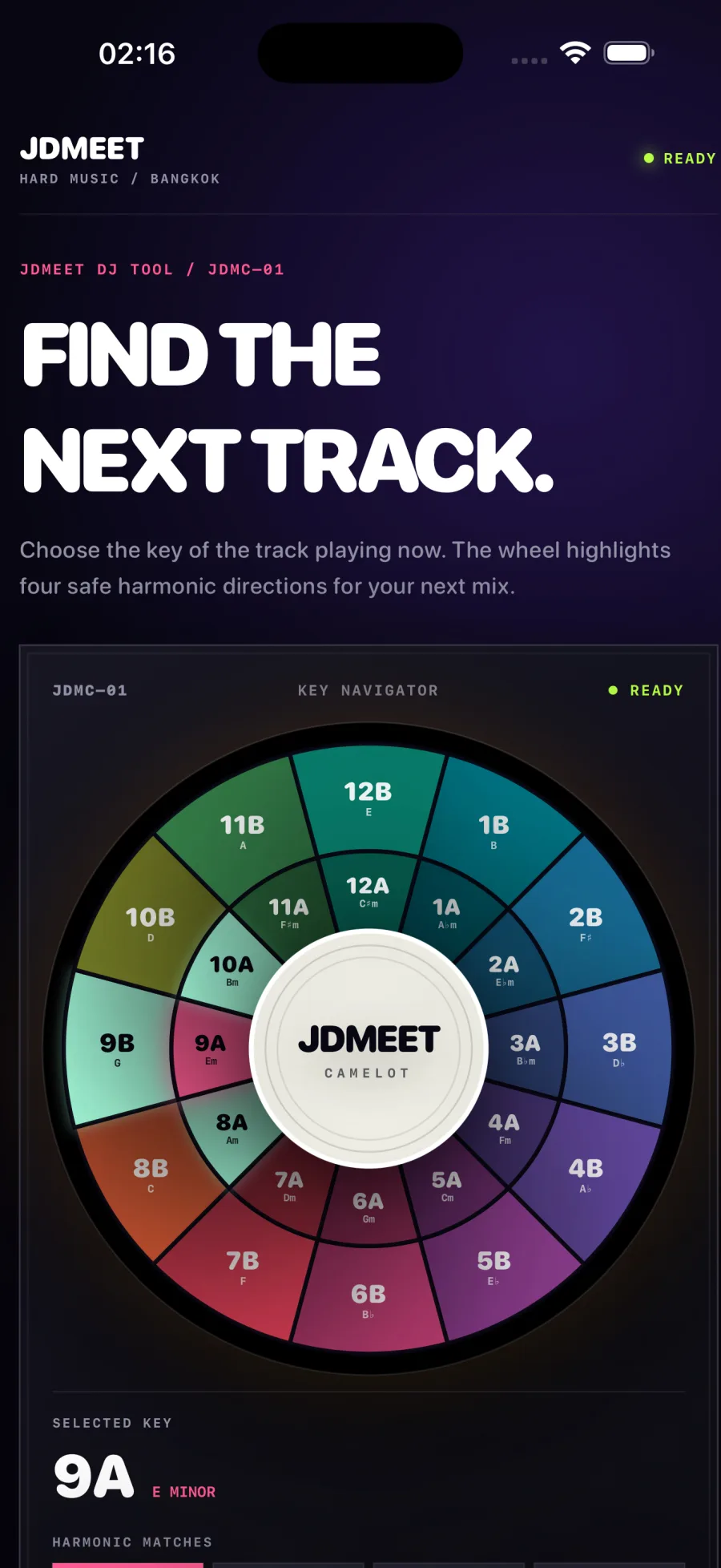
An offline harmonic-mixing companion for iPhone and iPad. Choose a key on the 24-key Camelot wheel to see compatible neighbours and relative major or minor keys. Includes haptic feedback and VoiceOver support, with no account or advertising.
A practical scope for website maintenance, monitoring, backups, lead delivery, reporting and accountable support—plus the items that need separate approval.
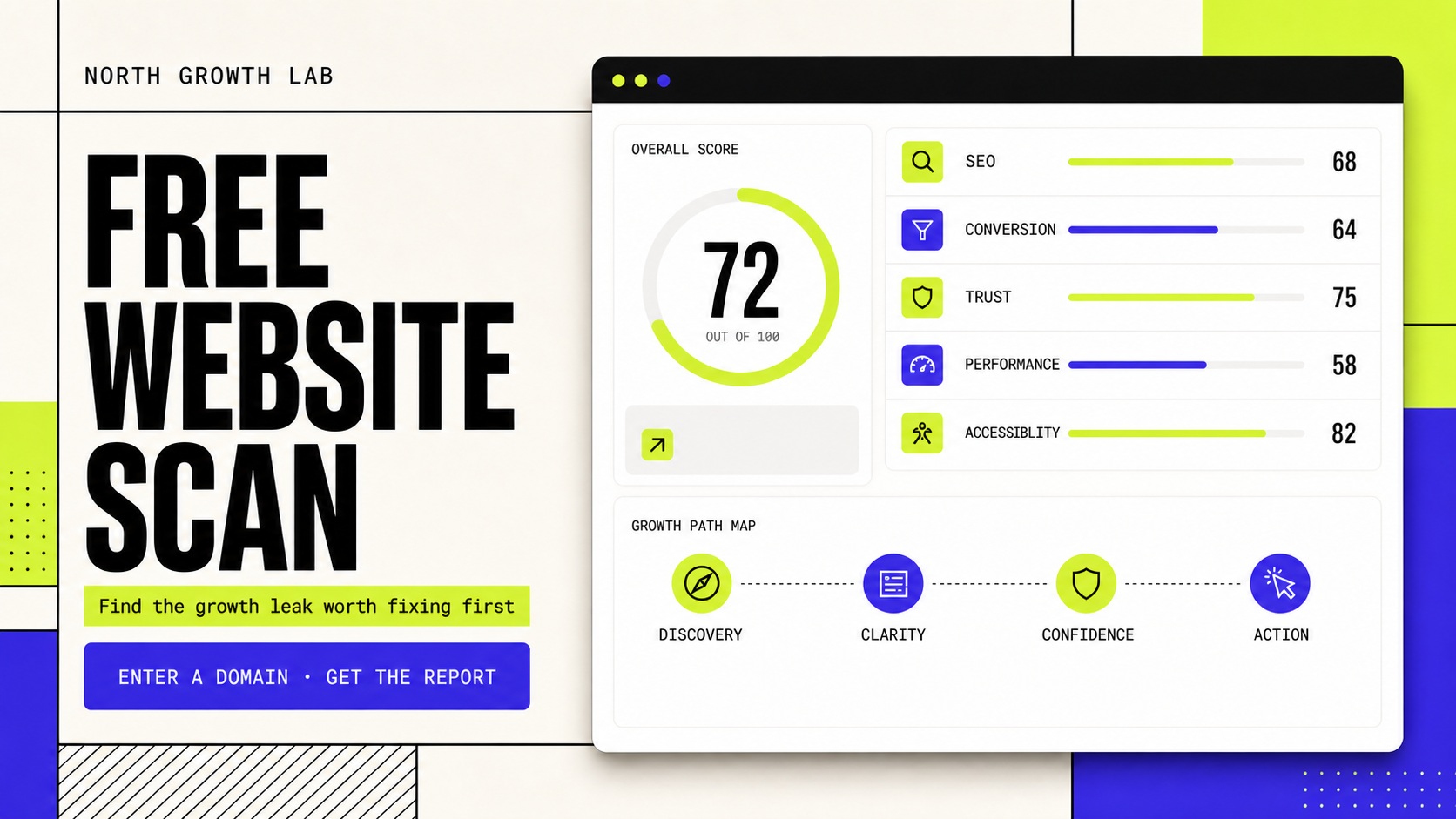
Map a Google Ads landing-page lead from accepted form to delivery, qualification and customer outcome with a practical search-to-sale measurement plan.
A copy-ready Google Ads landing page brief connecting search intent, ad promise, proof, qualification, tracking, lead routing and launch acceptance before design begins.
A practical framework for deciding whether to redesign the current website, rebuild the platform or improve the highest-leverage pages without replacing everything.
A realistic website redesign or rebuild timeline covering discovery, copy, development, content and SEO migration, integrations, quality assurance and launch.
Web application development typically costs $10,000–$100,000+, depending on workflows, roles, data, integrations and risk. Compare practical 2026 scope bands.
How North Growth Lab designed and built a responsive six-pad rhythm sampler with real audio, rapid retriggering and live waveform feedback for the JDMEET artist website.
Landing page or website for Google Ads? Use a six-check decision matrix, hotel and design-studio examples, and a practical brief to choose the right destination.
A transparent guide to landing-page scope, cost drivers and budgeting for businesses that need qualified leads from paid search—not a decorative one-page design.
A practical decision framework for choosing a website, web application, iOS or Android app—and knowing when the business needs a connected combination.
Compare iOS, Android and simultaneous mobile development by audience, product behavior, device requirements, release operations and commercial evidence.
How we rebuilt our studio website around real projects, distinct service pages and crawlable content, with a practical release record and clear measurement limits.
How We Are Building a Car Rental Marketplace for Web and Mobile
Updated August 20, 2026
An anonymized product study of building a two-sided car-rental marketplace across web discovery, mobile workflows, bookings, payments and operations.
This is an active confidential marketplace build. Identifying details and unreleased product decisions are withheld; the business problem, product architecture and delivery approach are described at a responsible level. Verified launch outcomes will be added when they exist.
The project started as a marketplace idea—not a list of screens.
The useful first question was not how closely the product should resemble an existing car-rental app. It was whether a specific renter and a specific vehicle supplier could complete one trustworthy transaction more clearly than through fragmented listings, messages, spreadsheets and manual payment coordination.
That distinction changes the scope. A polished search screen cannot create dependable availability, pricing, identity, pickup, return, payout and support operations on its own. We therefore framed the work as a marketplace operating system with public web discovery and mobile product surfaces—not as a decorative booking-site redesign.
Choose the operating model before copying a peer-to-peer marketplace.
A Turo-like reference can communicate the broad category, but it does not define the business. A peer-to-peer car rental marketplace, a managed fleet, a dealer network and a hybrid platform assign inventory control, pricing, vehicle standards, handoff and support responsibility differently. Those decisions change the product before they change the interface.
We map who owns the vehicle, who approves it, who sets price and availability, who performs pickup, who carries each operational risk and how the platform earns revenue. The strongest product is not the closest visual copy of a known marketplace. It is the system whose roles and economics fit the actual supply strategy.
Operating model
Peer-to-peer marketplace
Inventory and operations
Independent owners list and operate vehicles within platform rules
Product emphasis
Supplier onboarding, trust, availability, handoff evidence and payouts
Operating model
Managed fleet
Inventory and operations
One operator controls vehicles, preparation and service
Product emphasis
Fleet availability, maintenance, locations, staff workflows and utilization
Operating model
Dealer or partner network
Inventory and operations
Approved businesses contribute inventory
Product emphasis
Organization accounts, delegated roles, inventory feeds, standards and reconciliation
Operating model
Hybrid marketplace
Inventory and operations
Several supply types share customer discovery
Product emphasis
Explicit eligibility, configurable policies and consistent booking truth across suppliers
One marketplace contains several products sharing one transaction.
These surfaces should not invent their own version of the booking. One shared model must determine who can change availability, when a vehicle is held, what confirms a transaction, which evidence is required and how an exception is escalated.
Product surface
Public website
Primary job
Discover vehicles, markets and the proposition
What must stay connected
Searchable inventory, policies, accounts and booking state
Product surface
Renter experience
Primary job
Compare, qualify, book, collect and return
What must stay connected
Identity, payment, messages, documents and trip timeline
Product surface
Supplier experience
Primary job
List vehicles and operate bookings
What must stay connected
Availability, pricing, approval, handoff, payout and performance
Product surface
Operations console
Primary job
Resolve exceptions and protect the marketplace
What must stay connected
Users, vehicles, bookings, money movement, evidence and support history
Product surface
Mobile applications
Primary job
Handle repeated and time-sensitive trip actions
What must stay connected
The same account, booking, messages and governed business rules
We define the booking as a state machine before designing every screen.
Marketplace prototypes often show the happy path: search, select, pay and drive. Production work lives in the transitions around that path. A vehicle can be draft, under review, listed, unavailable, held, booked, in pickup, active, returned, disputed or archived. A payment, identity check or supplier action can block each transition.
Writing those states and responsible actors first exposes missing rules earlier than a large set of polished mockups. It also gives web, iOS, Android, notifications and the operations console one vocabulary for the same transaction.
Name who may trigger every transition and who may reverse it.
Separate a temporary availability hold from a confirmed booking.
Record the reason and evidence behind cancellations, adjustments and disputes.
Design timeout, payment failure, no-response and no-show states deliberately.
Keep an auditable event history instead of overwriting the previous truth.
Trust and safety are product workflows, not a badge in the footer.
A two-sided vehicle marketplace asks strangers to trust identity, asset condition, timing, payment and responsibility. The product must make eligibility, required documents, vehicle evidence, pickup expectations, prohibited behavior, incident reporting and human escalation understandable at the moment each rule matters.
The exact verification, insurance, tax and consumer requirements depend on the operating market and qualified professional advice. The platform architecture should make those policies configurable and reviewable rather than burying them inside interface copy or application releases.
Risk question
Is the person eligible?
Product response
Identity, age, license and policy checks with explicit review states
Risk question
Is the vehicle eligible?
Product response
Ownership or authority, specifications, documents and condition evidence
Risk question
What was handed over?
Product response
Timestamped pickup and return records, photos, mileage and fuel or charge state
Risk question
What happens when plans change?
Product response
Visible cancellation, extension, late-return and refund rules
Risk question
Who resolves an exception?
Product response
A support route with access to the complete booking and evidence history
Marketplace payments are a ledger, not one checkout button.
The customer charge, marketplace fee and supplier payout may happen at different times. Cancellations, deposits, extensions, partial refunds, chargebacks, taxes and disputes can change the final amount. The system needs an internal record of what each amount represents even when a payment provider moves the money.
A marketplace payment product such as Stripe Connect can provide connected-account, onboarding and payout capabilities, but the marketplace still owns its commercial rules, transaction records, support decisions and reconciliation process. Provider integration does not remove the need for an explicit money model.
Define when a price becomes binding and when inventory becomes unavailable.
Separate authorization, capture, platform fee, supplier earning and payout status.
Make cancellations and adjustments traceable to the original booking.
Design reconciliation and support access before transaction volume grows.
Keep sensitive payment data inside the appropriate provider boundary.
The website and mobile apps should divide the work deliberately.
The public website can explain the marketplace, expose useful inventory and market pages, support organic discovery and let a new visitor begin without installing software. A responsive web application can validate the complete transaction before native investment is justified.
Mobile applications become valuable when the product depends on repeated, time-sensitive or device-assisted behavior: saved searches, trip reminders, secure messaging, identity capture, pickup evidence, navigation context and return workflows. Both surfaces should use the same backend, account and booking state rather than becoming parallel products that drift apart.
SEO starts with useful inventory and operating truth.
A marketplace can technically generate thousands of vehicle, category and location URLs. That does not make them useful search pages. A crawlable page should represent inventory or a market the platform can genuinely serve and provide original information that helps a renter make a decision.
Faceted filters require a deliberate crawling policy because combinations of dates, price, transmission, body type and features can create effectively unlimited URLs. Stable canonical pages, crawlable internal links and controlled parameter behavior should be designed with the marketplace model—not bolted on after inventory launches.
Index vehicle pages only while they provide a useful, current and policy-compliant record.
Create market pages from real supply, pickup logic and local operating information—not swapped city names.
Keep date and availability controls useful to people without turning every filter state into an indexable page.
Link from public discovery pages into the appropriate account or booking workflow without hiding essential content behind interaction.
Plan removal, replacement and canonical behavior for unavailable inventory before launch.
The first release proves one complete marketplace loop.
This sequence resists the temptation to launch several cities, vehicle categories and application platforms before the transaction is dependable. Expansion should follow evidence from completed bookings, supplier operations, support load and repeat behavior—not the visual completeness of the prototype.
Release stage
Clickable system model
Question to prove
Can renters, suppliers and operators understand the same transaction?
Responsible boundary
Core states, roles, rules and exception paths
Release stage
Production MVP
Question to prove
Can one eligible vehicle complete one real booking safely?
Responsible boundary
Accounts, listing, availability, booking, payment, handoff and support
Release stage
Operational hardening
Question to prove
Can the team resolve normal exceptions without engineering intervention?
Responsible boundary
Administration, evidence, reconciliation, alerts and documented ownership
Release stage
Market expansion
Question to prove
Does another market justify new supply and policy work?
Responsible boundary
Configurable rules, local evidence, support capacity and measured economics
Why this is a platform rebuild rather than a better-looking website.
A weak marketplace experience can appear to be a design problem because customers see confusing search, inconsistent listings and an awkward booking path. Repainting those screens would leave the underlying availability, permissions, transaction and operational conflicts intact.
The stronger rebuild connects the public proposition, searchable inventory, responsive booking application, mobile roadmap, supplier tools, operations console, payments, analytics and support evidence around one governed transaction. The visual system matters, but it becomes valuable because the platform underneath can keep the promise made on the first page.
Car rental marketplace development FAQ.
What should a car rental marketplace MVP include?
A responsible first release normally needs renter and supplier accounts, vehicle onboarding, eligibility review, availability, search, one complete booking state model, payment handling, pickup and return evidence, notifications and an operations console for exceptions. The exact boundary depends on the launch market and operating model.
How is a peer-to-peer car rental marketplace different from a traditional rental platform?
A peer-to-peer marketplace coordinates independent vehicle owners and renters, so supplier onboarding, eligibility, availability, handoff evidence, payouts and dispute operations become core product workflows. A traditional rental operator usually controls the fleet, locations and staff directly. A hybrid model must make the different supply rules explicit while preserving one reliable customer booking experience.
Should a car rental marketplace launch as a website or mobile app first?
A responsive web application is often the fastest way to prove public discovery and the complete transaction. Native mobile apps become justified when repeated trip behavior, notifications, camera capture, location context or retention creates material value. Both should share one backend and account model.
Can an existing car rental website be rebuilt into a marketplace?
Yes, when the current brand, content or demand remains useful. The rebuild must add the product foundation—roles, inventory, availability, bookings, money movement, operations and support—while preserving valuable URLs and evidence instead of treating the project as a visual reskin.
How do you keep a confidential marketplace project private in a case study?
We omit the company, brand, markets, commercial terms, private architecture and unreleased product details. We describe only generalized product decisions that are useful to other businesses, clearly label the work as in progress and avoid claiming outcomes that have not been independently verified.