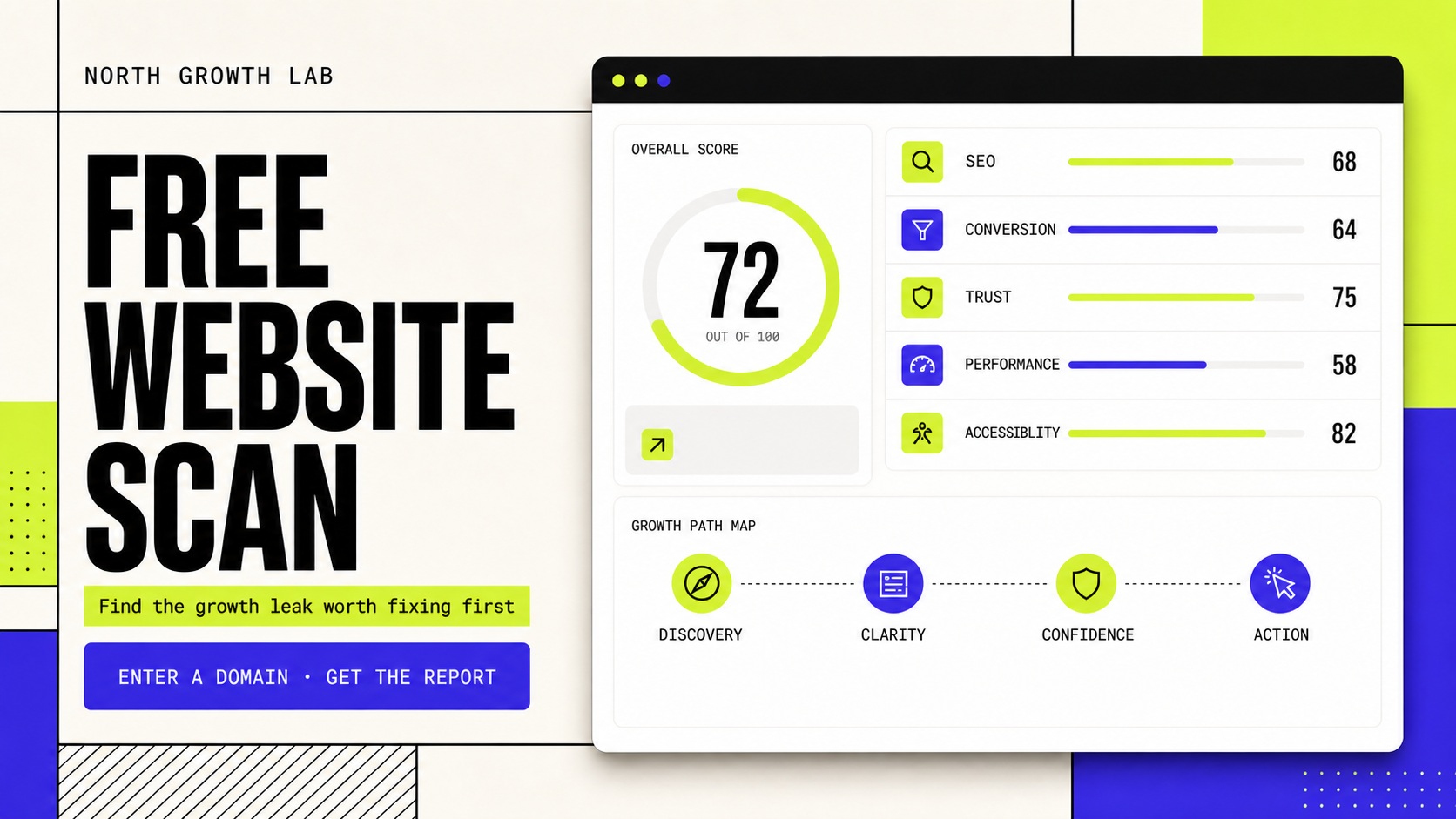
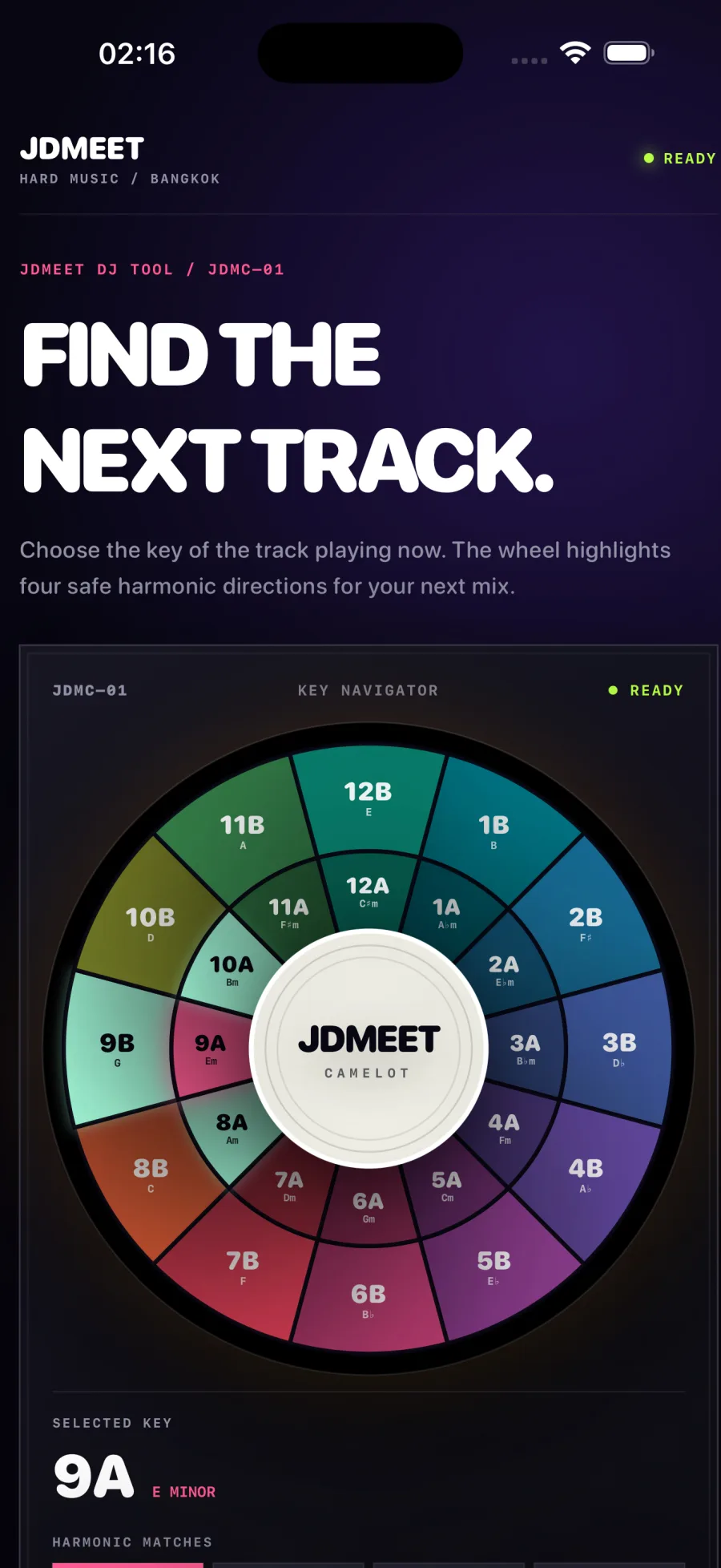
Client websites, our own working products and native apps. Two selected hospitality and brand concepts are clearly labelled.
LIVE PRODUCT
WE ARE MK STUDIO
A marketing studio with a personal point of view.
About this project
A complete identity and website for Madina Kabidenova’s marketing studio. The MK monogram, blue palette and scroll-controlled film lead into case studies and a callback form connected to Telegram and corporate email.
Our live JD Studio website brings web design, application development and automation into one studio identity, with motion-led storytelling, selected work and a direct project enquiry path.
An artist website for a Bangkok-based DJ performing across Asia. Live-session video, selected SoundCloud mixes and direct Telegram booking bring his sound and identity together.
Learn verbs in your browser. Keep practising on iPhone.
About this project
A language-learning website and native iPhone app for English and other languages. Search verbs, explore conjugation tables, listen to pronunciation and practise active recall with multilingual explanations. The web version works on phones, tablets and desktop browsers.
An offline harmonic-mixing companion for iPhone and iPad. Choose a key on the 24-key Camelot wheel to see compatible neighbours and relative major or minor keys. Includes haptic feedback and VoiceOver support, with no account or advertising.
A practical scope for website maintenance, monitoring, backups, lead delivery, reporting and accountable support—plus the items that need separate approval.
Map a Google Ads landing-page lead from accepted form to delivery, qualification and customer outcome with a practical search-to-sale measurement plan.
A copy-ready Google Ads landing page brief connecting search intent, ad promise, proof, qualification, tracking, lead routing and launch acceptance before design begins.
A practical framework for deciding whether to redesign the current website, rebuild the platform or improve the highest-leverage pages without replacing everything.
A realistic website redesign or rebuild timeline covering discovery, copy, development, content and SEO migration, integrations, quality assurance and launch.
Web application development typically costs $10,000–$100,000+, depending on workflows, roles, data, integrations and risk. Compare practical 2026 scope bands.
How North Growth Lab designed and built a responsive six-pad rhythm sampler with real audio, rapid retriggering and live waveform feedback for the JDMEET artist website.
Landing page or website for Google Ads? Use a six-check decision matrix, hotel and design-studio examples, and a practical brief to choose the right destination.
A transparent guide to landing-page scope, cost drivers and budgeting for businesses that need qualified leads from paid search—not a decorative one-page design.
A practical decision framework for choosing a website, web application, iOS or Android app—and knowing when the business needs a connected combination.
Compare iOS, Android and simultaneous mobile development by audience, product behavior, device requirements, release operations and commercial evidence.
How we rebuilt our studio website around real projects, distinct service pages and crawlable content, with a practical release record and clear measurement limits.
Google Ads Landing Page Conversion Tracking: Search to Sale
Updated August 16, 2026
Map a Google Ads landing-page lead from accepted form to delivery, qualification and customer outcome with a practical search-to-sale measurement plan.
This is an implementation-planning framework, not a promise of campaign performance or individualized privacy, legal or platform advice. The worked record is hypothetical, and Google Ads configuration should be checked against the current account, market, consent requirements and primary documentation.
A Google Ads landing-page conversion is the start of the record—not the end.
A campaign can report a form conversion while the business receives no usable inquiry. The browser may have fired an event before validation, the message may never have reached the inbox, the CRM may have lost the landing-page context or the sales team may use a different definition of qualified. Each dashboard can look correct while the commercial chain is broken between systems.
The practical fix is not another button-click tag. Write one search-to-sale measurement contract that names the business fact created at each stage, where it is stored, which record connects it to the previous stage, who owns the next action and how the team tests it. Then install only the measurement required to represent those facts honestly.
Use this search-to-sale trace contract.
The table below is an original planning model for a lead-generation campaign. Adapt the names to the real CRM and operating process, but preserve the distinction between stages. A later stage should never be inferred merely because an earlier one occurred.
Stage
Ad click and arrival
Business fact and system
A paid click reached the intended page; Google Ads and web analytics
Context or key
Landing path, source/campaign context and available click identifier
Measurement and acceptance test
Test the final URL and confirm required context survives the real arrival path
Stage
Form accepted
Business fact and system
The server accepted a valid inquiry; website or backend
Context or key
Stable lead or transaction ID, page, form and consent state
Measurement and acceptance test
Record the website conversion once after acceptance; match it to one stored record
Stage
Lead delivered
Business fact and system
The inquiry reached the responsible destination; inbox, CRM or booking system
Context or key
The same stable ID and readable landing context
Measurement and acceptance test
Reconcile the site receipt with the downstream record and make delivery failure observable
Stage
Lead working
Business fact and system
A responsible person began handling the inquiry; CRM or operating system
Context or key
Owner, first-response time and current disposition
Measurement and acceptance test
Populate the owner and timestamp from a real workflow action—not from the form success state
Stage
Qualified or disqualified
Business fact and system
Written fit criteria were applied; CRM
Context or key
Decision, reason, decision time and stable lead ID
Measurement and acceptance test
Review a sample against the documented criteria; do not infer qualification from one form answer
Stage
Converted or closed
Business fact and system
The agreed customer or loss outcome was recorded; CRM or financial system
Context or key
Outcome, value where supportable, currency and stable transaction ID
Measurement and acceptance test
Reconcile imports, duplicates, failures and conversion delay against the source records
Preserve enough context to reconcile the lead—without turning analytics into a CRM.
The public page should pass the minimum context required to identify the journey later: landing path, form, permitted source and campaign values, available Google click identifiers, consent state and a stable lead or transaction ID created by the responsible system. The downstream record should retain those values without overwriting them with the latest notification or a salesperson's manual note.
Customer information needs a different boundary. Email, phone, name and address belong in the lead system that is prepared to protect and use them. Do not place raw customer data in ordinary analytics event names, URLs or generic parameters. When enhanced conversions are appropriate, Google requires approved tagging or upload methods, customer-data terms and consent where applicable. Hashing is part of an approved implementation; it is not permission to send customer information through any route.
Record field
Stable lead ID
Why it exists
Joins page receipt, delivery, qualification and outcome
Ownership rule
Create once; never use an email address as the public record key
Record field
Landing page
Why it exists
Identifies the promise and form that created the inquiry
Ownership rule
Store the actual path received, not only the current homepage
Record field
Source and campaign context
Why it exists
Connects the inquiry to the acquisition decision
Ownership rule
Define first-touch and current-touch rules instead of silently overwriting
Record field
Google click identifier when available
Why it exists
Supports eligible Google Ads attribution and offline measurement
Ownership rule
Capture and transmit only through the approved measurement design
Record field
Consent state
Why it exists
Records the state relevant to the data use at that moment
Ownership rule
Store the applicable signal and policy version with the responsible record
Record field
Qualification and loss reason
Why it exists
Explains whether the lead fits and where demand is being lost
Ownership rule
Use a controlled list plus an optional note; keep definitions consistent
Name events after business facts, not interface gestures.
Google Analytics recommends a lead-generation event set that can continue beyond the first form. The vocabulary is useful because it separates lead creation, active handling, qualification and closure. It is only useful, however, when the trigger represents the named fact. Calling a button click generate_lead does not prove the form was accepted; calling every form fill qualify_lead does not create a qualification decision.
Choose one authoritative trigger for each fact and document the duplicate rule. A thank-you page may be part of the user experience, but it can be revisited or loaded after a failed downstream handoff. Where the stack allows it, confirm acceptance on the server or destination and fire the event once with a non-personal stable identifier suitable for deduplication.
Event or state
form_start
Record it when
The visitor begins the defined lead form
Do not confuse it with
A lead or a conversion
Event or state
generate_lead
Record it when
The valid request is accepted by the responsible endpoint
Do not confuse it with
A submit click, validation attempt or page view
Event or state
working_lead
Record it when
A representative begins the documented response process
Do not confuse it with
An automated notification
Event or state
qualify_lead
Record it when
The business applies its written fit criteria and the lead passes
Do not confuse it with
A complete form or contactable person
Event or state
disqualify_lead
Record it when
The lead fails the criteria and a usable reason is recorded
Do not confuse it with
A lead that has not yet been reviewed
Event or state
close_convert_lead
Record it when
The agreed customer outcome occurs
Do not confuse it with
A meeting, proposal or optimistic pipeline stage
Event or state
close_unconvert_lead
Record it when
The opportunity closes without the customer outcome
Do not confuse it with
A temporarily inactive lead
Choose the Google Ads connection from the fact you can maintain.
An accepted website inquiry can be recorded as an online conversion. A qualified or converted lead happens later and normally belongs to the CRM or operating system. Google Ads supports qualified-lead and converted-lead goals for those deeper offline outcomes, while Google Analytics can report recommended lead stages when the business sends them consistently.
Enhanced conversions for leads can use approved first-party customer data and Google identifiers to improve the match between a website lead and a later offline outcome. It is not a reason to collect extra fields that the business does not need. The implementation must satisfy Google's customer-data policies, applicable consent requirements and the account's current technical path.
The platform path is time-sensitive. Google's current help states that from June 15, 2026, new or non-allowlisted offline and enhanced-lead upload use is moving away from legacy Google Ads API upload behavior toward Data Manager API workflows. Treat current Google documentation and the account diagnostics as the source of truth rather than copying an old integration tutorial.
Available business fact
Accepted online inquiry
Useful measurement layer
Website conversion and generate_lead
Readiness condition
The endpoint, event and duplicate rule are tested
Available business fact
Lead is being worked
Useful measurement layer
CRM stage and working_lead where implemented
Readiness condition
A real owner action creates the timestamp
Available business fact
Lead meets written criteria
Useful measurement layer
Qualified-lead goal or qualify_lead
Readiness condition
The definition and feedback process are stable
Available business fact
Lead becomes a customer
Useful measurement layer
Converted-lead goal or close_convert_lead
Readiness condition
The outcome, timing and value are reconciled
Available business fact
Offline outcome needs ad attribution
Useful measurement layer
Enhanced conversions for leads or approved offline import
Readiness condition
Terms, consent, identifiers, data source and current Google path are verified
Run an end-to-end test record before paid traffic scales.
A tag debugger proves that a browser request happened. It does not prove that the business can find the same lead later. Test from a real campaign-style URL through the page, backend, destination and operating record. Use clearly marked test data, then remove or exclude it according to the system's test procedure.
Keep a small evidence table with the test case, expected result, observed result, stable record ID, owner, timestamp, pass or fail and follow-up. That record makes discrepancies actionable: development can see the accepted request, marketing can see the event and sales can find the same ID in the CRM.
Test case
Campaign-style arrival
Expected evidence
Correct page loads and permitted context reaches the lead record
Failure the test exposes
Redirect, parameter or landing-page loss
Test case
Valid submission
Expected evidence
One accepted record, one visitor success state and one website conversion
Failure the test exposes
Early firing or duplicate conversion
Test case
Invalid submission
Expected evidence
Visible correction and no accepted lead event
Failure the test exposes
False conversion from a failed attempt
Test case
Downstream delivery
Expected evidence
The same stable ID appears for the responsible owner
Failure the test exposes
Success message with a lost lead
Test case
Duplicate or retry
Expected evidence
Defined deduplication or a deliberate second record
Failure the test exposes
Inflated leads and conflicting ownership
Test case
Qualification update
Expected evidence
The written criterion, reason and time are recorded
Failure the test exposes
Every form being labelled qualified
Test case
Offline import or sync
Expected evidence
Accepted, failed and duplicate rows are reconciled in diagnostics
Failure the test exposes
Silent partial failure or stale outcome data
Worked hypothetical: a website-redesign search becomes a qualified opportunity.
This example is hypothetical and contains no real lead or client data. A business owner searches for a website redesign partner and reaches a focused page from a paid-search ad. The arrival record contains the landing path, permitted campaign context and an available Google click identifier. The visitor submits a request describing an outdated service website and a migration deadline.
The backend validates the request and creates test-style record L-260814-017. Only then does the visitor see success and the website record generate_lead. The same ID reaches the CRM with the landing page and source context. A responsible person begins the response and the record moves to working—not qualified—because nobody has yet confirmed fit.
During the first conversation, the team confirms that the business owns the current site, needs a migration-safe rebuild, has an accountable approver and has a realistic delivery window. The CRM records the agreed criteria and marks the lead qualified. If the opportunity later becomes a signed project, the converted outcome is recorded with the same stable ID. If it closes without a project, the loss reason is recorded instead. No stage is created automatically from the previous one.
Hypothetical record
Stable ID
Value
L-260814-017 (invented for this example)
Hypothetical record
Landing fact
Value
Website-redesign service page received a paid-search visit
Hypothetical record
Accepted lead fact
Value
Validated request stored and delivered successfully
Hypothetical record
Qualification fact
Value
Ownership, project need, approver and timing met the written criteria
Hypothetical record
Outcome fact
Value
Converted or closed only when the CRM records the agreed business outcome
Hypothetical record
Evidence limit
Value
The example demonstrates the contract; it does not claim a conversion rate or revenue result
Evaluate low-volume lead generation without inventing certainty.
A low-volume B2B or service campaign may not produce enough qualified or converted leads for a clean experiment quickly. That does not justify optimizing toward easier decorative actions. It means the team should separate what can be verified immediately from what needs a longer commercial window.
At launch, verify destination, form acceptance, delivery, event uniqueness and ownership. As traffic arrives, review search terms, relevant sessions, response time and qualification reasons. Later, compare qualified-lead rate, customer outcomes, conversion delay and cost against equal periods or a controlled change. Do not declare a landing-page winner from button clicks, one good week or a universal traffic threshold detached from the business's volume and sales cycle.
Technical evidence: the page, form, routing and events work as specified.
Demand evidence: search terms and visitors match the intended buying situation.
Lead evidence: accepted requests reach a responsible owner with the required context.
Qualification evidence: fit decisions use the same written criteria and reasons.
Commercial evidence: customer outcomes and value can be reconciled to the original lead record.
Use this implementation handoff before launch.
A complete measurement plan lets marketing, development and sales inspect the same lead without pretending that one platform owns the whole truth. The landing page earns the inquiry; the operating system proves delivery and qualification; the final business record determines whether paid search created a valuable outcome.
Name the online action, qualification rule and final customer outcome separately.
Assign one system of record and one responsible owner to every stage.
Create a stable non-personal record ID and document how every system receives it.
List the landing, campaign and click context that must survive the handoff.
Keep customer data inside approved, protected systems and document consent requirements.
Fire the website conversion only after the request is accepted, with a duplicate rule.
Define delivery failure, retry, fallback and internal alert behavior.
Record qualification and loss reasons from written criteria—not intuition alone.
Choose the current Google Ads import or enhanced-conversion path from official documentation.
Reconcile diagnostics, failed rows, duplicates and conversion delay on a recurring schedule.
Compare qualified and customer outcomes before increasing budget or multiplying landing pages.
Google Ads landing-page conversion tracking FAQ.
What should count as a Google Ads landing-page conversion?
Count the meaningful action the page can verify, such as an accepted form, confirmed booking or connected call with an appropriate measurement setup. Keep qualification and customer outcomes as separate later stages. A button click or form-start event can be diagnostic, but it should not be presented as a successful lead.
Is a thank-you page enough for Google Ads lead tracking?
A thank-you page can support tracking, but it is weaker when visitors can revisit it, the page loads before downstream acceptance or the route does not prove delivery. Where the stack allows it, tie the conversion to confirmed form or booking acceptance and apply a duplicate rule, then test the lead in the destination system.
Should Google Ads optimize for form leads or qualified leads?
Use the deepest reliable business fact the organization can define, record and return consistently. A new setup may begin with accepted leads while the qualification process is stabilized. Qualified or converted lead goals become useful when their definitions, volume, delay, import process and diagnostics are dependable; there is no responsible universal choice for every account.
Do we need enhanced conversions for leads?
Not every business is ready for them. Enhanced conversions for leads can help match later offline outcomes to ad interactions, but the business needs suitable first-party data, approved implementation, customer-data terms, applicable consent, a stable CRM process and the current Google Ads data path. Do not collect unnecessary customer data solely to enable the feature.
Can Google Analytics replace the CRM for lead qualification?
No. Analytics can receive recommended lead-stage events and report acquisition patterns, but the CRM or responsible operating system should hold the customer record, owner, criteria, reason and commercial outcome. Send analytics the event needed for measurement, not the full customer record.